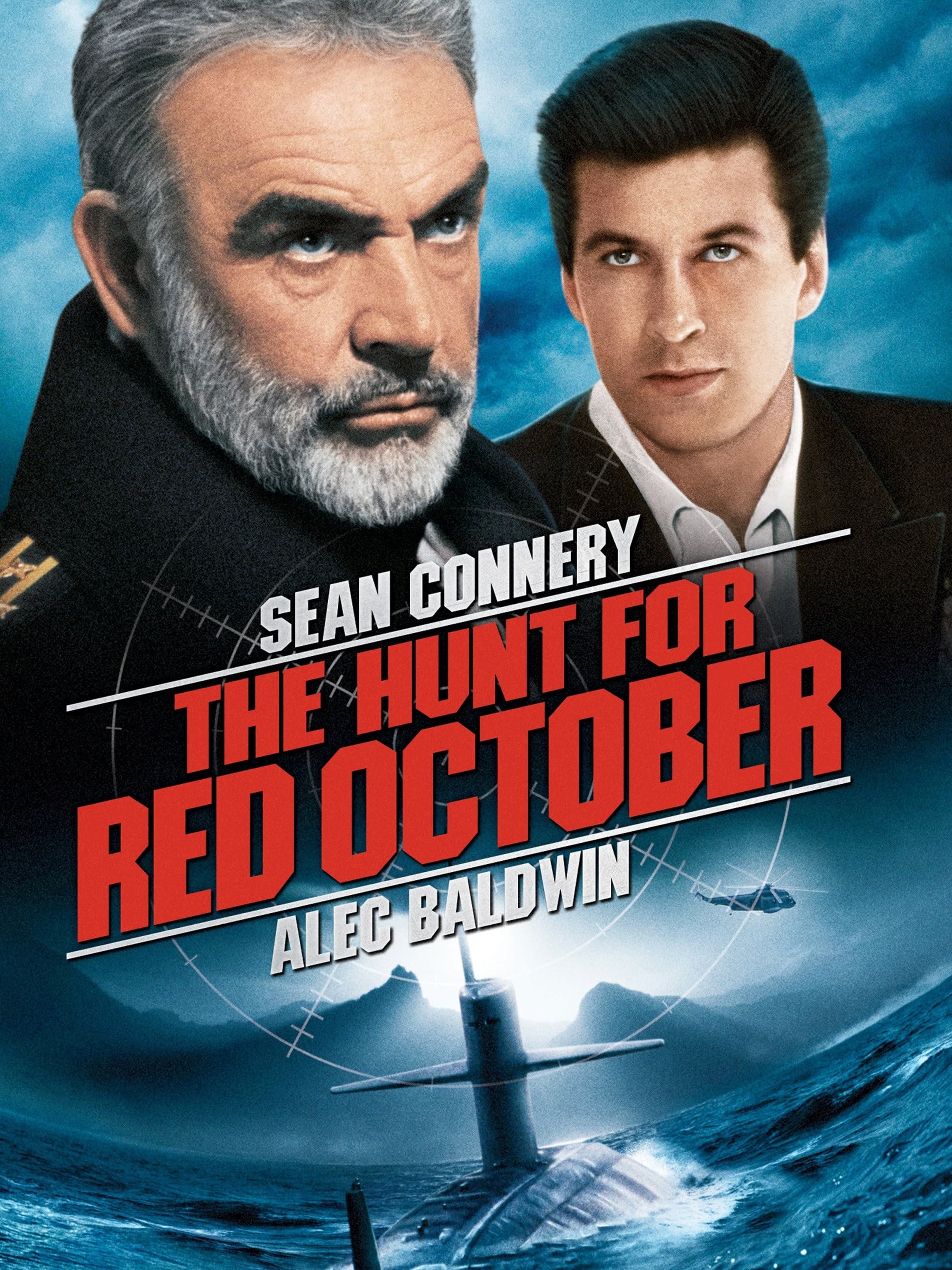
The Hunt for Red October
A submarine thriller steered by one man’s choice — and a mystery that keeps everyone guessing.
// The setup
PLAYBACK STARTED
There are films you remember for set-pieces and films you remember for a single, stubborn question. The Hunt for Red October is very much the latter: a cold‑war naval chase that begins the moment Captain Marko Ramius does something nobody aboard expects. Directed by John McTiernan and anchored around that central uncertainty, it still feels like a movie built to make grown men argue about motive.
THE MOVIE
Captain 1st rank Marko Ramius is still the reason this movie works
The Hunt for Red October doesn't open with a chase so much as with a question: when Sean Connery's Captain Marko Ramius does something drastic at sea, is he a traitor, a murderer or a man trying to outrun his country? That uncertainty — a single officer's choice rippling out into global suspicion — is what gives the movie its shape.
It's a Tom Clancy adaptation, yes, and John McTiernan directs it as a lean, high-technology submarine thriller. But the engine under the plot isn't gadgets; it's Ramius steering the Red October and everyone else trying to work out why he went to sea under false pretences.
That mystery forces the film to juggle Cold War brinksmanship, naval manoeuvre and a constant tug-of-war between intelligence and military judgment — and it keeps the audience invested because the answer isn't handed over on a plate.
THE SETUP
The idea that sets The Hunt for Red October in motion
At its heart the film runs on a single, simple hypothesis: Jack Ryan, a CIA analyst, thinks Ramius isn't planning to launch missiles — he's planning to defect with his submarine. Proving that reading before forces on both sides turn a tense situation into an armed one is the movie's central conflict.
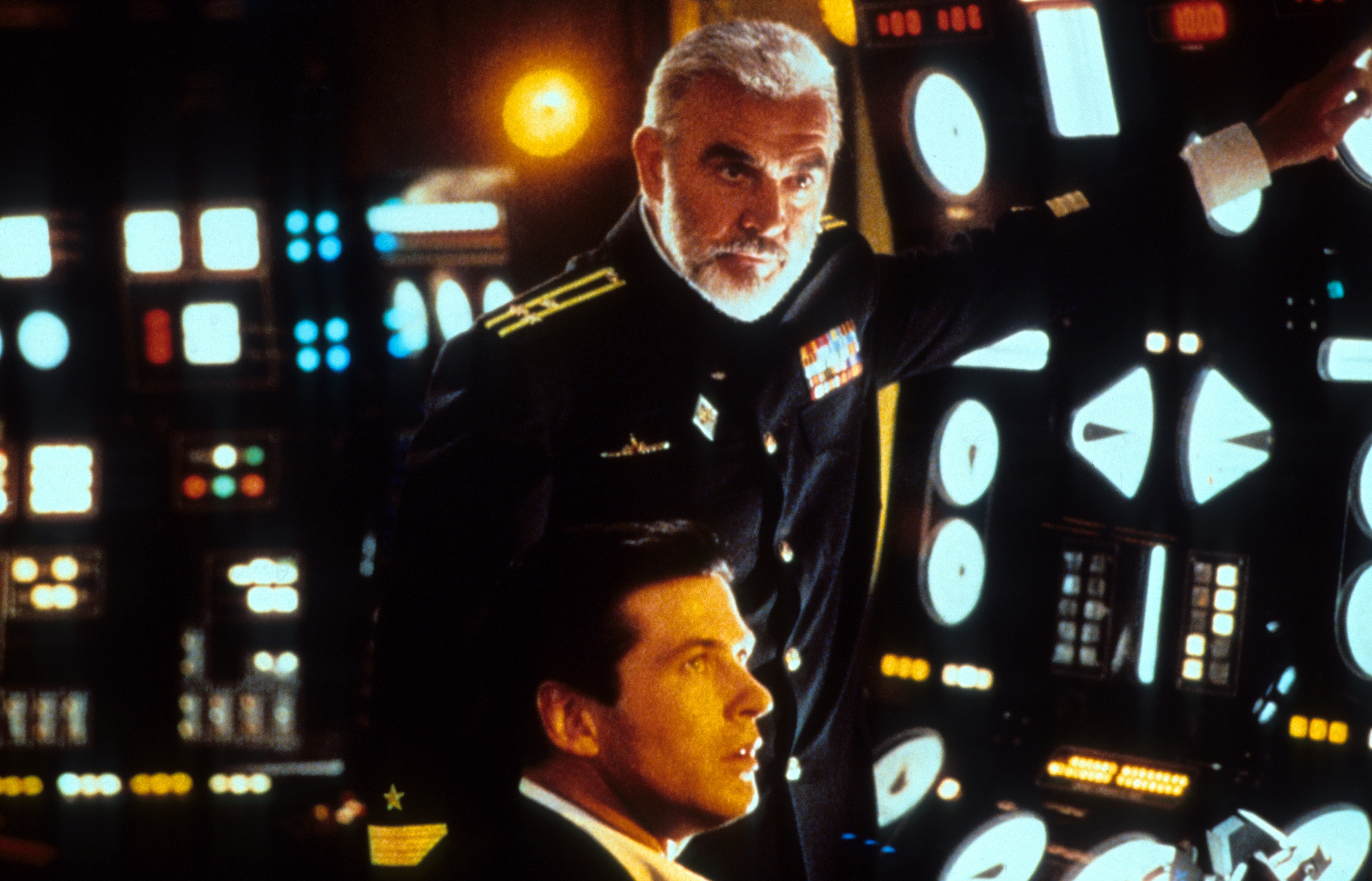
The Red October itself supplies the practical reason for the hunt. Its near‑silent propulsion — the film's so‑called caterpillar drive — means passive sonar struggles to pick it up, which is a tidy technical way to keep the cat-and-mouse chase credible without inventing plot holes.
Rather than staging one vast set-piece, the movie escalates through discrete naval encounters: mid‑ocean boarding attempts, submarine-to-submarine tactical manoeuvres and an undersea transfer that keeps tension punched up while the stakes are argued over in briefing rooms and mess decks.
All that detail nudges the picture into 'dense technical exposition' territory — a point contemporary reviewers often made — but it also gives the plot something solid to hang on, so the mystery feels like it belongs to machines as much as to motives.
THE CHARACTER
Why Captain 1st rank Marko Ramius matters
Marko Ramius is the lever that moves the whole film. Sean Connery plays a Soviet submarine commander whose decision to act at sea turns a technical thriller into a suspense story about reading motive under pressure.
The movie deliberately keeps his reasons ambiguous for long enough that every character around him — and every institution watching from afar — has to make a call about what his actions mean. That ambiguity forces the drama: it's not just about machinery, it's about how people interpret dangerous behaviour.
Put simply, Ramius matters because his choices force others to choose too, and those choices expose the difference between intelligence, military instinct and raw suspicion.
THE PERFORMANCE
Why Sean Connery's performance matters
Contemporary coverage singled out the casting as a major part of the film's operation: reviewers highlighted Sean Connery's presence in the role and treated the pairing of his Ramius with Alec Baldwin's civilian-analyst Jack Ryan as central to the film's effectiveness.
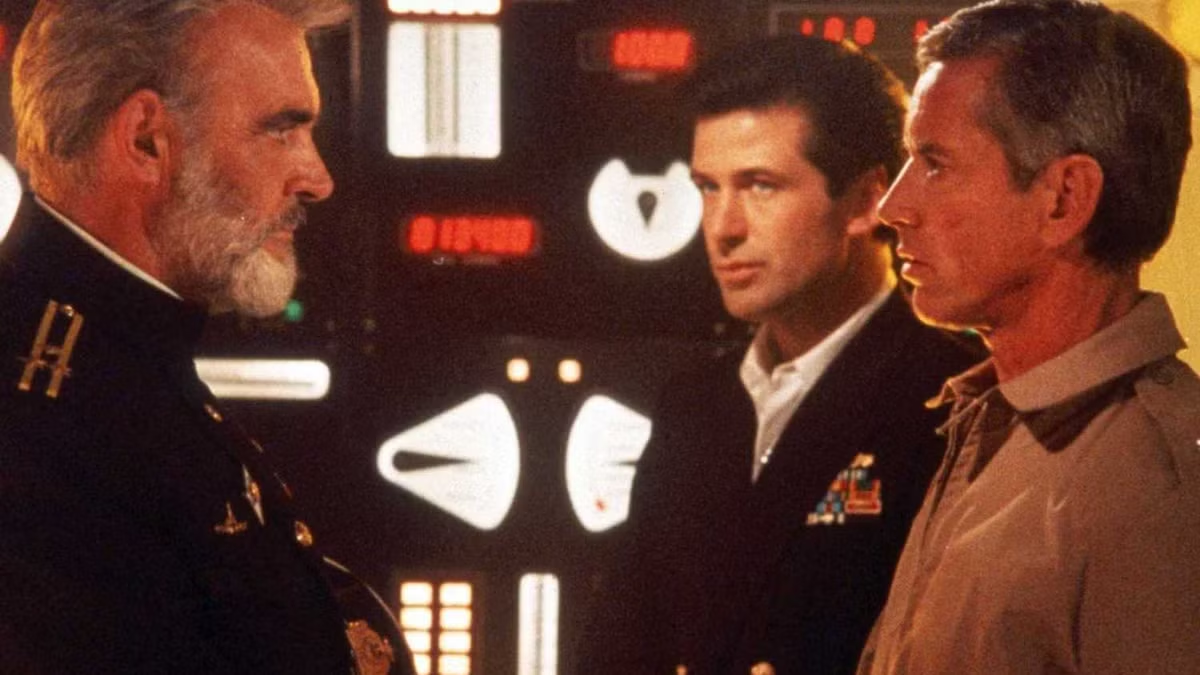
That attention matters because it shapes how viewers read Ramius. When press notices emphasise Connery's bearing, the character's ambiguous acts become interpretable moments rather than pure puzzles — the actor's screen persona helps the audience decide whether to trust him.
So even if the movie leans on technical detail and naval spectacle, the conversation about motive stays human, and the contemporary response shows the filmmakers relied on the casting to keep that conversation engaged.
UNDER THE SURFACE
The Hunt for Red October has more on its mind than the plot suggests
Beneath the sonar pings and tactical briefings the film is quietly preoccupied with defection and asylum. The central mystery — whether Ramius intends to defect — gives the thriller a moral and political undercurrent that won't let the action be purely procedural.
Closely linked to that is Cold War brinksmanship: a single misread order can push two superpowers closer to open conflict, and the picture consistently shows how mutual suspicion bends decision-making toward the worst-case scenario.
That tension produces one of the movie's sustained arguments: intelligence insight versus military judgment. Analysts and admirals see different things, and the drama comes from watching those perspectives collide when time is short.
Which returns us to trust. Under pressure, instinct, protocol and fear all compete, and the film uses that competition to keep its human stakes as urgent as its technical ones.
THE FILMMAKING
How The Hunt for Red October was put together
John McTiernan directs with an eye for tension in tight spaces, supported by Jan de Bont's cinematography — contemporary reviews singled out the film's underwater intensity and camera work as part of what makes the film feel alive beneath the waves.
That technical confidence is matched by the sound design: the movie won the Academy Award for Best Sound Effects Editing and picked up further nominations in sound and editing, which underlines how much the filmmakers used auditory detail to sell submarine suspense.
So the identity of the picture comes from a mix of controlled visual staging and a soundscape that treats silence as much as noise.
PRACTICAL EFFECTS
The effects work that gives The Hunt for Red October its physical personality
Because filming inside real submarines was impractical, the production built full‑scale interior sets mounted on hydraulic gimbals to simulate pitch and roll. Those practical choices let actors move and cameras behave as if they were cramped beneath the sea without relying on obvious trickery.
The U.S. Navy also cooperated by lending ships and helicopters and supplying actual submariners as extras, which helped the scenes that take place on decks and in control rooms feel procedurally correct rather than merely cinematic.
Taken together, those practical measures give the film a physical personality: it reads as a movie that wanted its machinery to feel tangible and believable.
PURE 80S
The Hunt for Red October could not belong to any other decade
The picture was positioned as a high‑technology naval thriller at the tail end of an era that loved military-technology blockbusters; the production's visible cooperation with the Navy drew direct comparisons to earlier films that similarly traded on official access.
It also launched a trend in adapted techno-thrillers: this was the first of Paramount's Jack Ryan films and opened the door for the studio to keep mining Tom Clancy's stories through the early 1990s.
So while it's a 1990 film by date, its DNA is very much late‑1980s in spirit: big machines, institutional spectacle and the idea that modern geopolitics could be dramatised as a tight, suspenseful procedural.
THE LEGACY
Why The Hunt for Red October still matters
Part of the film's afterlife is straightforward: it was the first of the big Jack Ryan adaptations and directly led Paramount to produce the next entries in the series.
Another reason it remains discussed is technical recognition — the movie won an Academy Award for its sound effects editing and earned further nominations, which signals how much the craft side contributed to its identity.
Finally, the combination of Navy cooperation, practical submarine sets and an ensemble cast is often held up when people talk about late‑20th‑century action‑thriller filmmaking; the picture became, for a while, a reference point for how to stage believable naval suspense.
THE VERDICT
Does The Hunt for Red October still hold up?
Yes — if you're interested in a thriller that's as much about reading motive as it is about tactical exchanges. The film's central gamble is simple and smart: Ramius's choice sends the story into a thicket of suspicion, and Jack Ryan's insistence that the commander plans to defect gives the narrative a human interpreter to argue against alarms and instincts.
The caterpillar drive and the naval set-pieces provide a convincing raison d'être for the chase, and the movie keeps its tension focused through mid‑ocean boarding and submarine manoeuvres rather than a single blockbuster battle.
That focus, combined with how press attention framed Sean Connery and Alec Baldwin's casting, means the film works on two levels — a technical thriller and a study in how institutions respond to uncertainty.
So watch it for the knotty question at its centre and for the way the film stages answers: it's a competent, intelligent cold‑war thriller that still rewards viewers who like their suspense served with procedure and human guesswork.
Share this movie
// Keep watching
More movies from the 90s
If The Hunt for Red October is your kind of movie, there's plenty more on the shelves worth rewinding.

1990 // VHS
Edward Scissorhands
A fairy tale about a man who can’t quite touch the world — and the neighbourhood that can’t quite handle him.
1990 // VHS
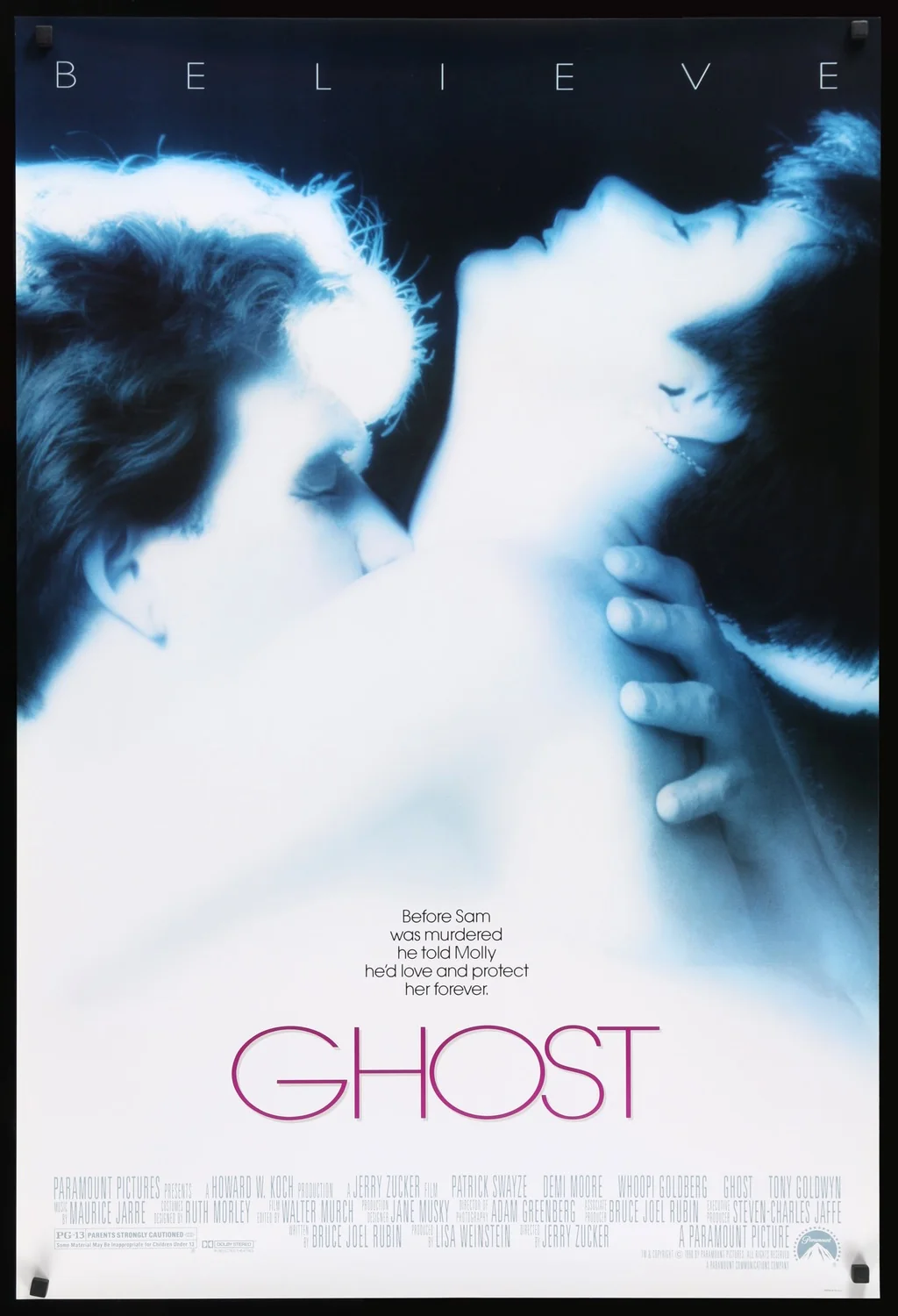
Ghost
A murder mystery disguised as a love story — with a man who won’t stop watching over the person he loves.

1990 // VHS
Total Recall
Memory, muscle and a very faulty holiday package — with Mars on the itinerary.