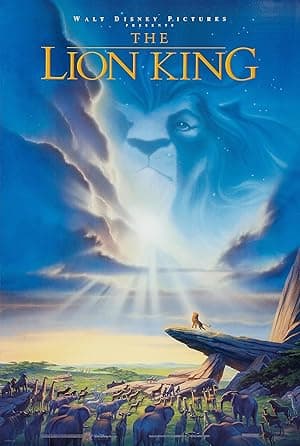
The Lion King
A coming-of-age fable with a roar — and a few songs you’ll still hum in the shower.
// The setup
PLAYBACK STARTED
People still talk about The Lion King because it treats a simple story — exile, guilt, return — like an epic. Directed by Roger Allers and Rob Minkoff, it wraps that weighty material in music, jokes and an eighty‑eight‑minute pulse that rarely lets up. Start with Simba and everything else follows.
THE MOVIE
Simba (adult speaking voice) is still the reason this movie works
There are plenty of memorable moments in The Lion King, but the film’s engine is unmistakably Simba’s arc: a prince who runs away, carries guilt, and eventually returns to challenge his uncle for the Pride Lands. That compact moral movement — leave, learn, come back — gives the whole thing shape.
The movie stakes that arc on a single brutal moment: a wildebeest stampede that ends with Mufasa’s death while saving his son. It’s the narrative shove that turns childhood mischief into lifelong duty and keeps the emotional stakes honest.
All of this is delivered tight and economical: Roger Allers and Rob Minkoff steer an 88‑minute musical drama that mixes big songs with clear, simple storytelling, anchored in the grown Simba voiced by Matthew Broderick.
THE SETUP
The idea that sets The Lion King in motion
At its cleanest, the film sets two simple forces against each other: Simba’s private, emotional journey toward adulthood and Scar’s public grab for power. That pairing keeps the drama moving without needing pages of backstory.
Because it’s an original story for the studio rather than a straight adaptation, those forces feel concentrated — a classic bildungsroman dressed as a family musical.
So the setup works because the personal and the political mirror one another: Simba’s reluctance to grow up matters because the kingdom itself depends on someone stepping up.
THE CHARACTER
Why Simba (adult speaking voice) matters
Simba isn’t interesting because he’s a flawless hero. He matters because his mistakes and doubts are the engine of the story. His guilt over his father’s death, the exile that follows, and the slow acceptance of responsibility are what turn a cartoon lion into a character you care about.
Everything else in the film orbits him: Mufasa’s lessons about the 'circle of life' echo through the story even after he’s gone, and the ridiculous, comforting philosophy of Timon and Pumbaa delays Simba’s reckoning long enough for the return to feel like a choice rather than inevitability.
Casting note: the adult speaking voice is supplied by Matthew Broderick, which is simply one piece of how the character is assembled on screen.
Technically the film leans on traditional hand‑drawn character animation to give Simba emotional clarity, even as larger sequences use computer assistance to widen the frame.
THE PERFORMANCE
Why Jeremy Irons's performance matters
Jeremy Irons supplies Scar’s voice, and contemporary reviewers picked that casting out as especially effective. Criticism at the time singled out his vocal turn as a highlight — reviewers enjoyed how deliciously wicked Scar sounded.
That vocal character gives Scar a theatrical cruelty that the film relies on: he’s not merely a plot obstacle, he’s someone who enjoys the throne and the deceit that put him there.
Because the role is mostly delivered through voice, the casting becomes part of the character bookkeeping: Irons’ turn supplies the bite the script needs without requiring extra exposition.
UNDER THE SURFACE
The Lion King has more on its mind than the plot suggests
On the surface it’s a family musical: songs, jokes, a few pratfalls. Underneath, the film is a tidy coming‑of‑age tale about handing on responsibility from one generation to the next.
Guilt and the possibility of redemption drive the emotional plot: the story asks whether you can forgive yourself enough to accept the job you were meant to do.
It’s also plainly about leadership — what it looks like to care for a community, and how a ruler’s failures ripple out into ecological and social consequences.
All of this hangs on the movie’s shorthand symbols — the king, the outcast, the guide — and the way those elements are sung, not just spoken.
THE FILMMAKING
How The Lion King was put together
The Lion King marries hand‑drawn character work with computer help where wider scale or camera motion demanded it. That mix lets the characters stay expressive while the film opens up into big, dramatic sequences.
It’s a pragmatic approach: use traditional animation for emotional beats, and bring in digital tools when the scene needs a crowd or a complicated move the old methods would struggle to manage.
That combination gives the film a particular identity — familiar Disney character animation with occasional stretches that feel much larger in scope.
PRACTICAL EFFECTS
The effects work that gives The Lion King its physical personality
The wildebeest stampede — the sequence that changes everything for Simba — was achieved by digitising a hand‑drawn run cycle, building 3D models and then multiplying them in a simulation to create believable herd movement.
Those CGI herd elements were composited back with hand‑drawn characters and processed through Disney’s digital pipeline so lighting and camera moves could be integrated cleanly.
In short: the sequence feels massive because it genuinely used new technical tricks to scale the action without abandoning the film’s traditional animation heart.
PURE 80S
The Lion King could not belong to any other decade
Coming in during the Disney 'Renaissance' of the late 1980s and early 1990s, the film fits a moment when the studio was reinventing itself with musicals that tried to be big and theatrical again.
That era encouraged harnessing modern techniques without abandoning the animated musical formula — which explains the mixture of ambitious staging and clear family storytelling.
So while it’s unmistakably a 1994 film in its production context, what ties it to the decade is less fashion and more the studio’s appetite for ambitious, crowd‑pleasing animation.
WATCHING IT NOW
What has aged — and what hasn't
Plenty of the film’s storytelling economy still lands: the emotional beats are compact and the musical numbers still work as narrative shorthand.
At the same time the movie has continued to attract critical discussion about how it represents characters and how it used African musical elements and vocal solos — those conversations are part of how new audiences read the film today.
Visually, the blend of hand‑drawn character work with occasional computer assistance still feels intentional rather than gimmicky: the choices were made to serve story, which helps it hold up.
THE LEGACY
Why The Lion King still matters
Its music and score earned the film formal recognition: the score and a principal song were rewarded at the Academy Awards, which underlines how seriously the movie took its music.
Beyond awards, the film’s afterlife is concrete: it became the basis for a long‑running stage musical and the foundation of a multi‑part franchise across TV, sequels and adaptations.
Those later lives — from Broadway to follow‑ups — show the story’s capacity to be retold in different forms without losing the core of Simba’s journey.
THE VERDICT
Does The Lion King still hold up?
Yes. The Lion King still works because its central drama is compact and human: a prince who runs from responsibility after a traumatising death and is later persuaded to come home. That emotional arc — guilt, exile, return — is simple and honest, and it keeps the film grounded even when the songs and spectacle swell.
The movie uses its musical set pieces and a time‑jump montage to mark Simba’s passage from cub to adult, which keeps the pacing brisk and the story clear across its 88 minutes. Rafiki’s role as the symbolic guide that reconnects Simba to his past gives the climax an earned push.
Technically and narratively it’s a product of its moment — directors Roger Allers and Rob Minkoff built an original story that married traditional character animation with digital tools where needed — and that pragmatic construction helps it still play today.
If you’re deciding whether to watch it now: go for Simba’s arc and the way the music carries emotional truth. It’s a family movie that remembers how to take the big stuff seriously without forgetting to sing about it.
Share this movie
// Keep watching
More movies from the 90s
If The Lion King is your kind of movie, there's plenty more on the shelves worth rewinding.
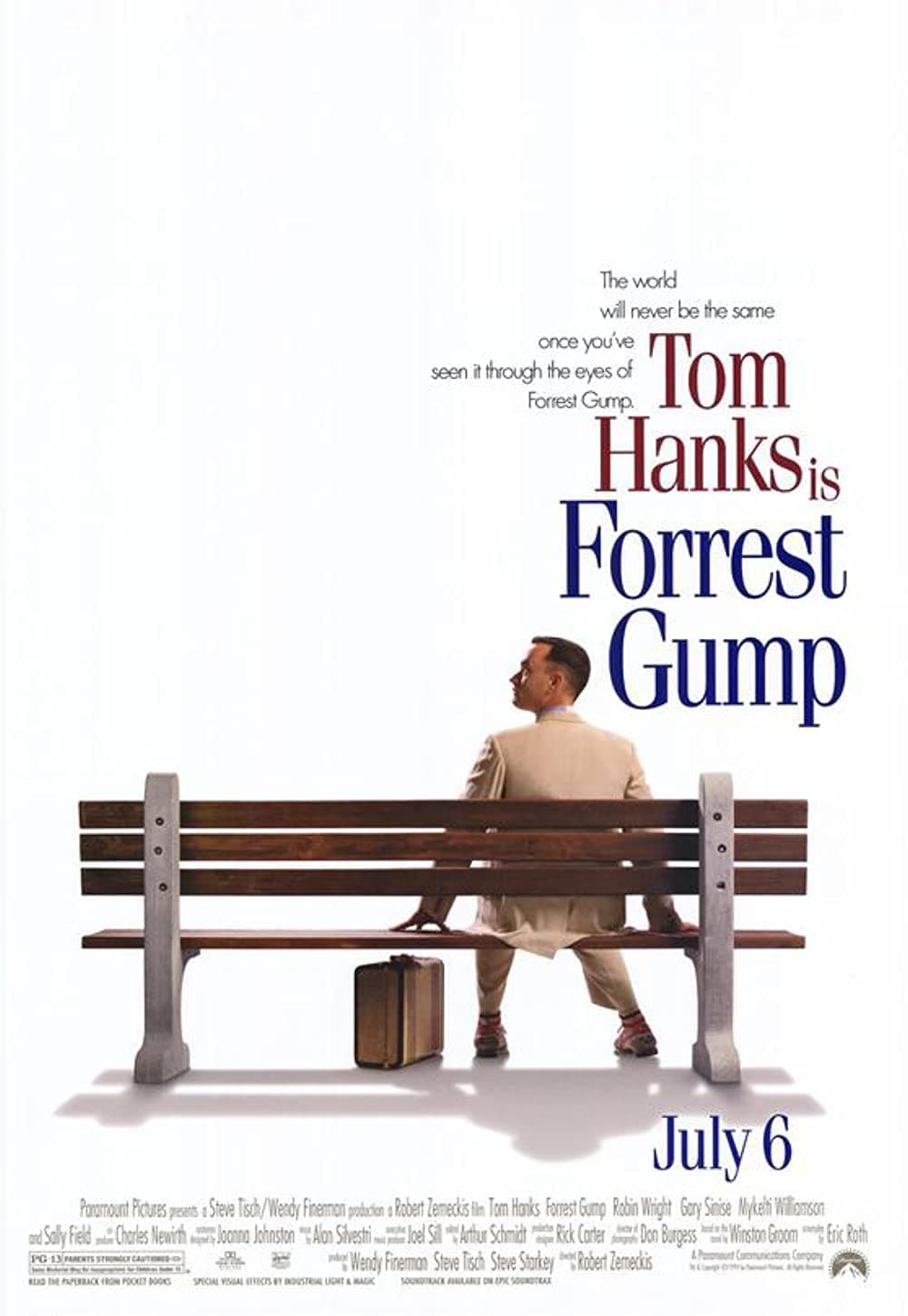
1994 // VHS
Forest Gump
A man on a bench who refuses to make history anything more complicated than a story worth telling.
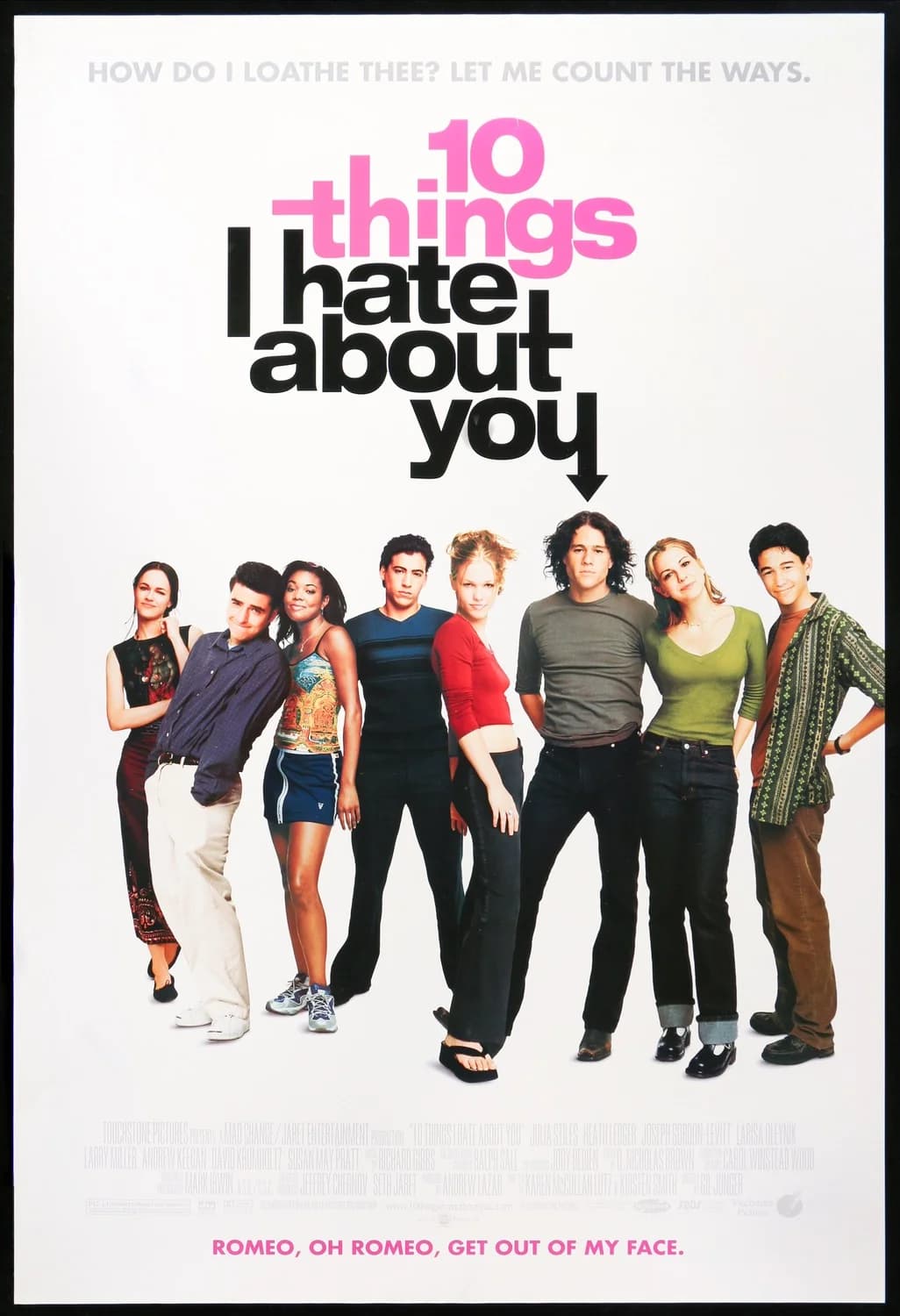
1999 // VHS
10 Things I Hate About You
Sibling rules, a rooftop serenade and one very stubborn Kat — Shakespeare in a school corridor.
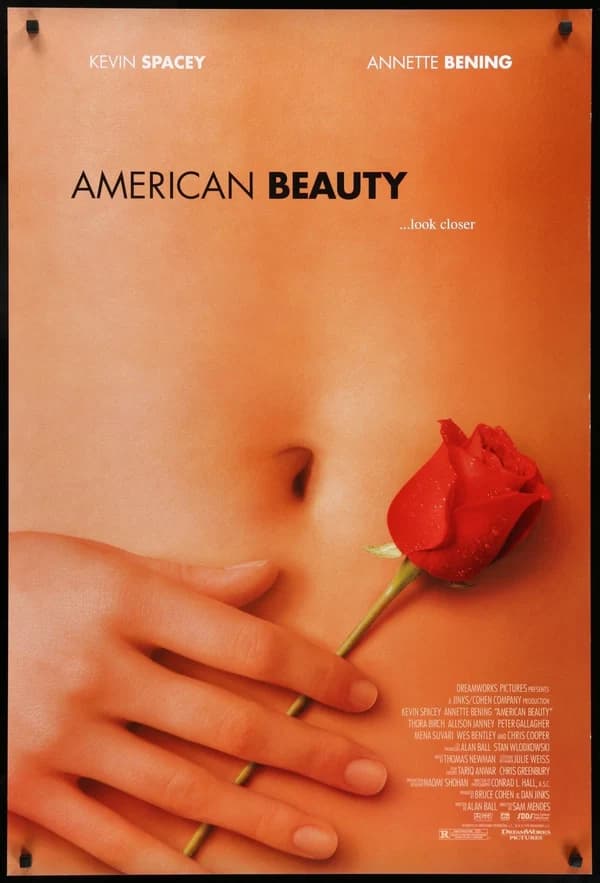
1999 // VHS
American Beauty
Lester Burnham, suburban rot and a midlife argument that still stings.