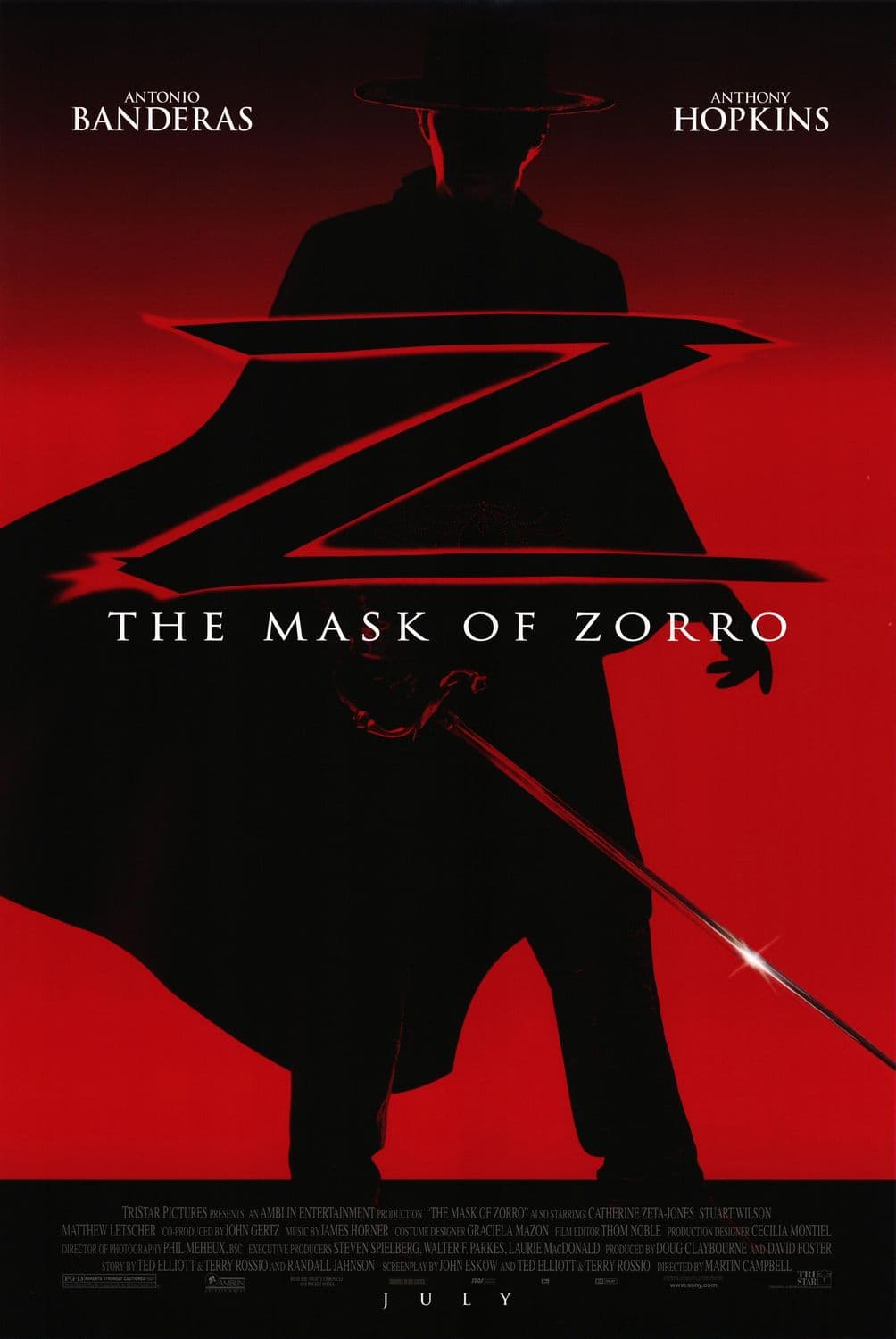
The Mask of Zorro
A swaggering revenge tale that turns a mask into a lesson in legacy.
// The setup
PLAYBACK STARTED
The Mask of Zorro still feels like a proper evening at the pictures: loud sword clashes, big horses, and a central performance that carries the rest of the film like a grin. Martin Campbell staged the whole thing with blockbuster polish, but it’s Alejandro Murrieta — the scoundrel who becomes Zorro — who keeps the movie honest. This piece looks at why that choice matters, what the film is really trying to say, and whether it still pays off now.
THE MOVIE
Alejandro Murrieta / Zorro is still the reason this movie works
If you remember one thing about The Mask of Zorro it’s the energy Alejandro brings: a thief with a score to settle who turns into a successor, not a copy, of an older legend. That transfer — an older Don Diego de la Vega trying to pass the Zorro mantle on — is the motor that keeps the plot moving and the emotions honest.
Martin Campbell directs with a clear eye for spectacle and momentum, but the film’s centre of gravity is personal. Don Diego is an ageing, grieving former vigilante driven by loss and the need to both avenge his family and find someone who can continue the fight. Training Alejandro isn’t just plot mechanics; it’s an attempt to hand over a responsibility.
That inheritance thread — legacy and succession, framed here as heroism that serves people rather than the ego of a single adventurer — is why the movie still hooks viewers. And it helps that the leads are plainly cast for those roles: Antonio Banderas plays Alejandro, Anthony Hopkins plays Don Diego, and Catherine Zeta-Jones appears as the emotional anchor who entwines the personal and political stakes.
THE SETUP
The idea that sets The Mask of Zorro in motion
The movie begins with a straightforward promise: an original Zorro wronged by a powerful man, and the search for recompense. Don Diego escapes imprisonment with two aims — to find his daughter and to make the man who destroyed his life pay — and that personal catastrophe establishes the stakes.
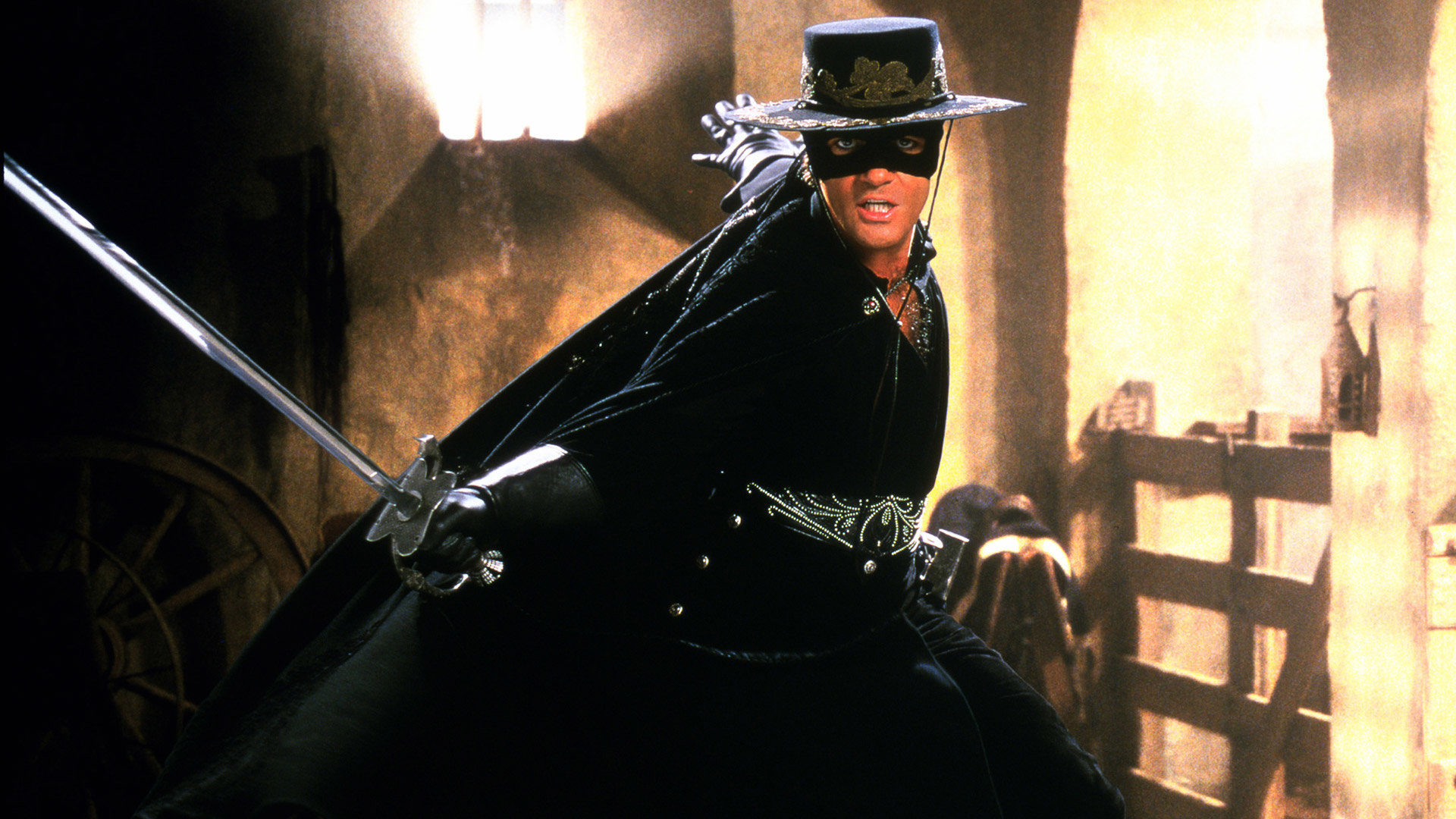
Fast-forward twenty years and the film lands on Alejandro Murrieta, an opportunistic thief whose own family grief makes him vulnerable to a different kind of offer. De la Vega sees in Alejandro the raw materials of a new Zorro: wounded, hungry and teachable.
From there the plot sets up a classic mentor–protégé arc. Training sequences shape Alejandro into a capable successor, and the film uses undercover identity — Alejandro slipping into a false noble persona — to get at the corrupt heart of Don Rafael Montero’s operation.
Those elements — lessons, disguise, infiltration and a string of thefts and raids designed to reveal and dismantle an exploitative gold-mining scheme — give the story structure without turning it into a mystery box. It’s a revenge tale that doubles as a handover ceremony.
THE CHARACTER
Why Alejandro Murrieta / Zorro matters
Alejandro isn’t introduced as an empty swashbuckling trope; he’s a charismatic small-time thief with a vendetta. That mixture of charm and grievance makes him believable as someone who could be reshaped into a hero rather than presented as one from the start.
The personal hook — Alejandro’s brother was killed, and that loss fuels his willingness to embrace de la Vega’s tutelage — gives his transformation emotional weight. The mask becomes credible because it arrives as a solution to a real wound, not merely a costume change.
Crucially, Alejandro’s arc ties into the movie’s broader idea of succession. This isn’t a story about replacing a legend for spectacle’s sake; it’s about two men negotiating what the Zorro name should mean in practical terms, and whether a new generation will hold to the old ideals.
And because the film deliberately references earlier screen Zorros while updating them for the 1990s, Alejandro’s version of Zorro works as both a nod to legacy and a fresh start — a character who matters because he bridges past and present, not because he copies either.
THE PERFORMANCE
Why Catherine Zeta-Jones's performance matters
Contemporary reaction singled Catherine Zeta-Jones out as a breakout presence, and that matters for how the film’s relationship scenes land. Elena functions as the emotional focus that ties Alejandro’s personal quest to de la Vega’s mission, so the character needed an actor who could hold attention in both romantic and political moments.
Reviews at the time also pointed to strong chemistry between Zeta-Jones and Antonio Banderas as a central reason audiences stayed invested. That chemistry is not a decorative bonus; it’s the glue that makes the mentor–protégé and revenge elements feel connected to real human stakes.
Because Elena is both the daughter separated from her birth family and Alejandro’s romantic interest, the role links two different narrative threads. The casting choice turned her into more than a plot device; she becomes a hinge where personal history and the broader fight against Montero meet.
Put simply: the film needed Elena to be more than an object of rescue or a prize, and contemporary reaction suggests Zeta-Jones gave the character the presence required to anchor those overlapping stakes.
UNDER THE SURFACE
The Mask of Zorro has more on its mind than the plot suggests
On the surface it’s a revenge yarn: a powerful man has ruined lives and a masked figure fights back. But the film layers that plainly appealing premise with a question about what to do with a heroic identity once it’s been forged by loss.
Legacy and succession are baked into the story. Don Diego isn’t simply grooming a replacement so he can retire; he’s trying to hand over an ethic — Zorro is presented repeatedly as a defender of the common people, not a glorified adventurer carving initials in the sand.
That tension — revenge versus broader justice — underpins Alejandro’s choices. He starts with a personal vendetta, but the training and his exposure to the Zorro idea nudge him toward something resembling public service rather than private satisfaction.
Identity and disguise do more than provide spectacle. Wearing the mask forces Alejandro to decide whether the role is about self-aggrandisement or serving others. The film makes the point several times: being Zorro is a responsibility before it is a thrill.
THE FILMMAKING
How The Mask of Zorro was put together
The movie is assembled by people who knew how to stage big, clear sequences: Phil Méheux is credited as director of photography, Thom Noble as editor, with Cecilia Montiel and Graciela Mazón handling production design and costumes. That team construction gives the film a unified craft sensibility.
Martin Campbell’s direction sits on top of that craft. The choices made by those departments keep the action legible and the characters readable across wide-ranging set pieces and quieter training beats.
Technical recognition followed: the film received Academy Award nominations for Sound and for Sound Effects Editing, which signals that at least some of the industry attention was on how the movie delivered its action and atmosphere through audio work.
All of which is to say: The Mask of Zorro was built as a mainstream studio adventure. The people credited on the film point to a production that intended clarity and spectacle in roughly equal measure.
PRACTICAL EFFECTS
The effects work that gives The Mask of Zorro its physical personality
Swordplay and riding are tactile here because they were practiced. Bob Anderson served as sword master and tutored the principal cast, which meant the film’s duels weren’t imagined in post-production — they were learned, rehearsed and executed.
Horsework forms a big part of the movie’s physical identity. A large stunt team and trick riders handled the mounted sequences, so the film’s momentum often comes from real riding rather than cutaway doubles.
Big moments like the mine and several chase set-pieces used extensive practical rigging — decelerators and air-ram style techniques were documented — which kept the stunts grounded and immediate.
More broadly, the production relied on in-camera stunts and second-unit choreography for many of its action beats rather than reaching first for digital fixes. That decision gives the film a physical personality that still reads on screen.
PURE 80S
The Mask of Zorro could not belong to any other decade
Although it premiered in 1998, the film wears its intent clearly: it was marketed as a conscious revival of classical Hollywood swashbucklers, reaching back to the Errol Flynn–style adventures that defined an earlier era. That throwback ambition shaped tone and pacing.
The production’s development history also feels late‑90s in the way big projects floated among notable filmmakers before settling. Names such as Robert Rodriguez and Mikael Salomon were attached in development prior to Martin Campbell taking the helm, a pattern familiar to studio filmmaking of the period.
Putting a full-blooded swashbuckler back into the mainstream was a deliberate bet in the late 1990s — one that mixed nostalgia for older adventure cinema with modern production values.
That blend — old-screen templates given contemporary production muscle — is why the film reads as both revivalist and of its moment: it’s a 1990s movie trying to be a classic, and that tension is part of its personality.
THE LEGACY
Why The Mask of Zorro still matters
On awards ground the film earned recognition in the technical categories, picking up Academy Award nominations for Sound and Sound Effects Editing. Those nods underline that the production aimed for craft-level impact, especially in its action work.
Commercially, the picture made a strong case for big-scale swashbucklers: its worldwide box office—reported above $250 million—helped make studio executives consider that mainstream adventure movies could still pay off at the turn of the century.
Beyond money and trophies, the film’s production craft and stunt work have been a recurring subject of retrospectives and oral histories; those discussions keep the movie in circulation for people who care about how action filmmaking is executed.
Put together, the nominations, the commercial success and the continued interest in how it was made explain why The Mask of Zorro remains a frequent reference point when people talk about late‑90s adventure filmmaking.
THE VERDICT
Does The Mask of Zorro still hold up?
Yes — if what you want is a big, well-made swashbuckler that understands why a mask matters. The film is built around a clear payoff: Alejandro is trained by de la Vega to take on Montero’s cruelty, and that arc gives the action an ethical frame beyond spectacle.
There are reasons to watch for the story choices as much as the set pieces. Don Diego’s motivation — escaping imprisonment to rescue his daughter and settle scores — keeps the film from drifting into empty pastiche, while Elena’s dual role as the man’s lost child and Alejandro’s love interest ties the personal to the political.
Craft and staging help sell the conceit. The film’s sound work and technical teams earned industry recognition, and the practical stunt and sword choreography back up the movie’s claim to be a serious adventure rather than a glossy costume show.
In short: The Mask of Zorro still does what it sets out to do. It hands a heroic identity down with thought, gives the heir a reason to carry it, and wraps both in enough spectacle and craft to make the lesson feel entertaining rather than preachy. Watch it for Alejandro’s journey first; everything else is the world making good on that promise.
Share this movie
// Keep watching
More movies from the 90s
If The Mask of Zorro is your kind of movie, there's plenty more on the shelves worth rewinding.
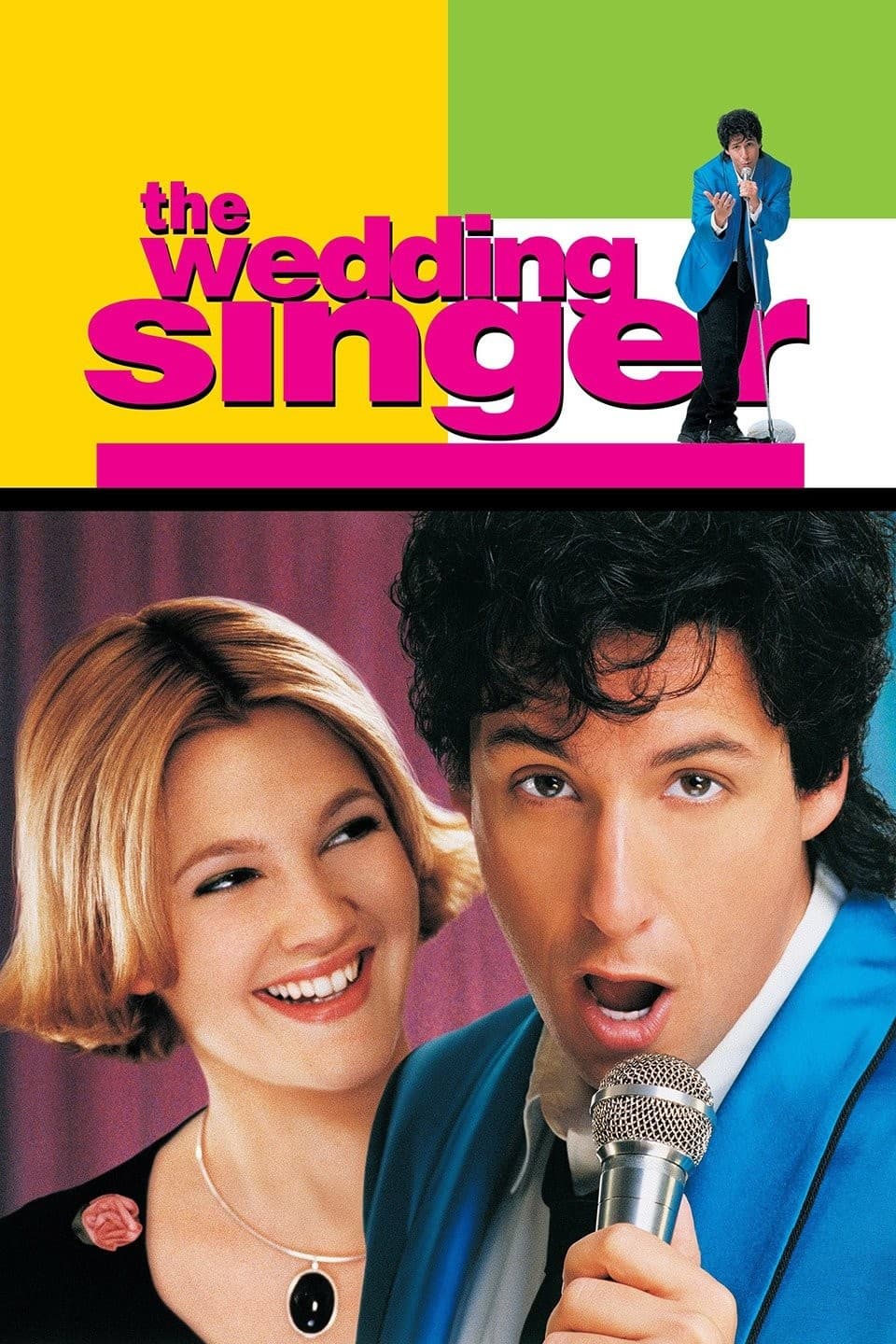
1998 // VHS
The Wedding Singer
A love story wrapped in 1980s pop — and carried by one very earnest wedding crooner.
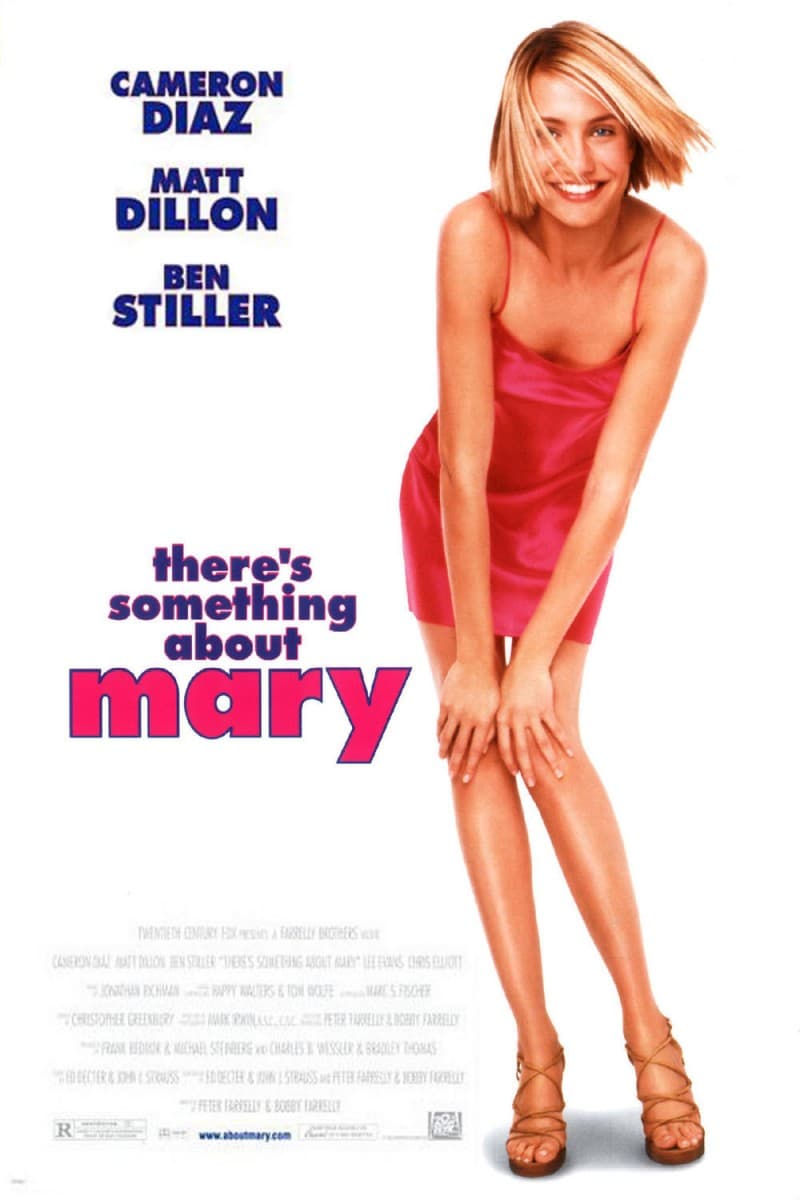
1998 // VHS
There's Something About Mary
Romantic obsession, awkward masculinity and a hair‑gel gag you can't unsee.
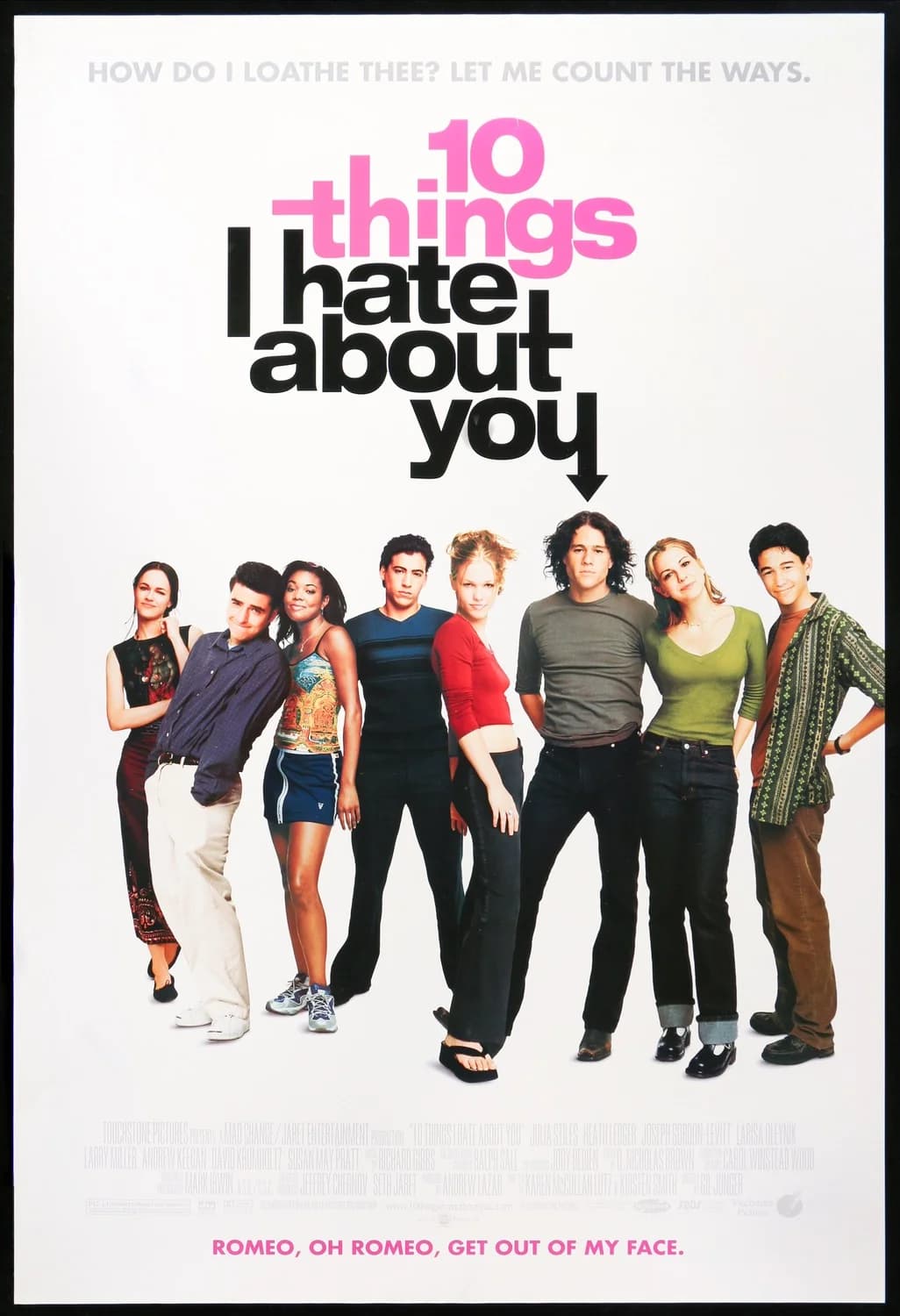
1999 // VHS
10 Things I Hate About You
Sibling rules, a rooftop serenade and one very stubborn Kat — Shakespeare in a school corridor.