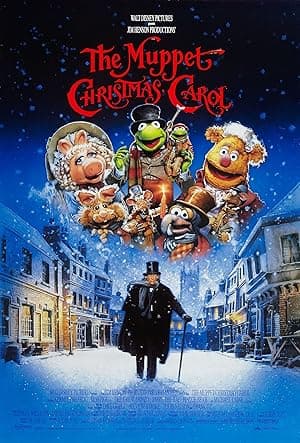
The Muppet Christmas Carol
Scrooge, the Muppets and a surprisingly sombre Christmas tale — all in eighty-six minutes.
// The setup
PLAYBACK STARTED
The Muppet Christmas Carol is the rare family film that can have you laughing at a pratfall one minute and quietly startled the next. Brian Henson steers the Muppets into Dickens territory and the result is a strange, winning hybrid: puppets playing people, a metafictional narrator and a very human moral at the story’s centre.
THE MOVIE
Ebenezer Scrooge is still the reason this movie works
If you remember one thing about The Muppet Christmas Carol, it’s probably the odd but brilliant idea of the troupe playing Dickens’ characters instead of turning up as themselves. That choice — Kermit as Bob Cratchit, Miss Piggy as Emily Cratchit, and so on — gives the film a useful tension: the usual Muppet chaos has to earn space inside a familiar moral fable.
The movie leans on that tension from the start by having The Great Gonzo act as a metafictional Dickens, with Rizzo as his running commentary. It’s a smart framing device: it keeps the adaptation clear and gives the Muppets somewhere to land when the story turns serious.
And at the centre of all this is Ebenezer Scrooge. Michael Caine plays him, and the plot is unmistakably Dickensian — a miser whose choices damage other people, dragged through a reckoning that offers the possibility of real moral change. That combination of puppet comedy and proper Scrooge keeps the film watchable, and worth revisiting.
THE SETUP
The idea that sets The Muppet Christmas Carol in motion
At its simplest the film follows Scrooge as he’s forced to confront three things: his memories, the present realities of people he’s hurt and the grim future that awaits if he doesn’t change. That familiar engine drives everything — the laughs and the darker bits alike.
What makes this version different is that the Muppets are not guest stars; they are the characters. By recasting the usual Muppet personalities as Dickensian figures, the film rejigs expectations so the jokes have to serve the story rather than derail it.
That’s why the movie can swing between lightweight musical numbers and genuinely Gothic moments. The tonal seesaw is deliberate: comedy and music lighten the ride, but the adaptation also keeps some of Dickens’ darker flourishes where they matter.
There’s also a sly note about storytelling itself. With Gonzo narrating, the film reminds you it’s an authored tale — a version of Christmas through a very particular, deliberately theatrical lens.
THE CHARACTER
Why Ebenezer Scrooge matters
Scrooge is the fulcrum. The entire film — from Gonzo’s jokey introductions to the Cratchit family’s domestic warmth — is calibrated around whether that central miser can be made to change. Without a believable Scrooge, the moral arc collapses into a string of sketches.
This version keeps the human stakes honest. Kermit’s Bob Cratchit and his family anchor the emotional side of the story; Tiny Tim’s illness is not just a plot device but the clearest demonstration of what Scrooge’s stinginess costs other people.
Because the Muppets are playing roles rather than being themselves, their usual antics have to find shelter inside Dickens’ rhythms. That helps the movie balance silliness and seriousness: the puppets provide colour and charm, but the story still asks the audience to take Scrooge’s choices seriously.
Contemporary reactions noticed that balance. Critics at the time singled out the central Scrooge as a disciplined presence — the kind of performance that keeps the film’s emotional beats believable amid the puppetry and comedy.
THE PERFORMANCE
Why Michael Caine's performance matters
Reviews at the time singled out Michael Caine’s Scrooge as a steadying force. In a film that could easily tip into novelty, the consensus was that his work maintained the story’s emotional truth.
Put plainly: when the picture asks you to care about Scrooge’s repentance, it’s Caine who carries that ask. Contemporary responses emphasised that discipline — the kind of centre the range of Muppet-type comedy needs.
That doesn’t mean the film becomes solemn. The Caine Scrooge allows the surrounding Muppet business to breathe because the audience trusts the stakes are real.
So the casting is less a stunt and more a practical decision: give the narrative a credible anchor and the rest of the movie can play its strange hybrid game with greater effect.
UNDER THE SURFACE
The Muppet Christmas Carol has more on its mind than the plot suggests
On the surface it’s a Christmas story about one man’s change of heart. Underneath, it’s interested in how past choices build a person’s identity: Scrooge’s memories of youth and lost relationships are presented as the causal threads that explain his present coldness.
There’s a moral economy at play, too. The film repeatedly points to the social consequences of greed: Scrooge’s business decisions ripple outward, and the Cratchits are the face of that damage.
Redemption is not offered as a sentimental fix but as a possibility earned through confrontation — with the past, with the living and with one possible bleak future. The stakes are ethical as much as personal.
Finally, the film contains a modest comment about storytelling. With Gonzo narrating, there’s a wink that this, too, is an authored tale — a version of Dickens done through the specific filter of the Muppets’ theatricality.
THE FILMMAKING
How The Muppet Christmas Carol was put together
A practical problem shaped a lot of decisions: this is a film where puppets and humans must coexist in the same frame. The production adjusted design and framing to accommodate both modes, using stylised sets and camera choices that let puppeteering and live-action sit together without feeling awkward.
That compromise explains the film’s look and rhythm. Scenes are often arranged to give the puppets clear sightlines and space to act, which in turn guides how the human actors perform around them.
The result is a co-ordinated craft exercise rather than gimmickry: everything is aligned to make the Muppets feel like characters inhabiting Dickens’ world, not interruptions in it.
Brian Henson, directing his first feature here, had to marry that practical choreography with the story’s tonal swings — from musical set-pieces to genuinely Gothic moments — and the filmmaking choices reflect that requirement.
PRACTICAL EFFECTS
The effects work that gives The Muppet Christmas Carol its physical personality
The film leans on the old-school Muppet toolkit: a large ensemble of experienced puppeteers brought the characters to life, especially in crowd and period sequences that needed density and movement.
Alongside the hands-on puppetry, the production used optical effects in specific shots to erase puppeteers so a Muppet could appear unassisted next to a human actor. It was a pragmatic solution — keep the illusion while working within the limits of puppetry.
Those two approaches together — visible craftsmanship and selective optical trickery — give the movie a tactile quality. The Muppets feel present in a room rather than composited into one.
It’s a reminder that the film’s personality comes as much from skilled practical performance as it does from script or song.
PURE 80S
The Muppet Christmas Carol could not belong to any other decade
This film sits firmly in the early 1990s moment when the Henson company was finding its feet after Jim Henson’s 1990 death. That context matters: The Muppet Christmas Carol is the first theatrical Muppet outing made under that new leadership, and you can feel a company both honouring a legacy and trying something slightly different.
On a market level it fits the early‑90s family/holiday slate — produced on a modest budget for the era and distributed through Disney’s channels — the sort of carefully pitched picture that aimed to please both children and adults.
Tonally it reflects a 1990s tendency to adapt literary material for families while keeping one foot in darker source material. The film’s choice to mix levity with genuine Gothic flourishes is very much of that period.
It’s also compact: at around eighty-six minutes, it’s lean by modern standards, which helps it juggle its multiple aims without overstaying its welcome.
WATCHING IT NOW
What has aged — and what hasn't
What still feels effective are the darker Dickens moments. Retrospectives and film institutions have observed that those sequences can still register as genuinely chilling for family viewers, which is an achievement for a Muppet movie.
By contrast, some of the musical numbers and broad Muppet comedy land more like conventional family entertainment: warm and serviceable, rather than surprising. They play the role they were meant to play, but they don’t always linger.
The decision to have the Muppets play Dickens’ characters continues to pay dividends: it keeps the emotional throughline intact, so the film’s heart — community and family, embodied by the Cratchits — remains readable to modern viewers.
All told, the blend of shadow and sugar is what allows the film to keep an audience now: the darker beats still sting, while the comic relief keeps it accessible to children.
THE LEGACY
Why The Muppet Christmas Carol still matters
Part of the movie’s afterlife is simply institutional: it’s an official collaboration between Jim Henson Productions and Walt Disney Pictures, and it occupies a stable place in the Muppet film catalogue.
It also marked the start of a run of theatrical Muppet films under Brian Henson’s stewardship — a concrete continuation of the franchise in the 1990s.
The film has been periodically reissued and programmed for retrospectives, including a UK re-release in December 2018, which shows there’s still appetite for seeing this particular Muppet take on Dickens.
That combination of franchise belonging and repeat screenings explains why it still turns up in seasonal line-ups: it’s a tidy, familiar option that offers something slightly different from other screen adaptations.
THE VERDICT
Does The Muppet Christmas Carol still hold up?
Yes — with a small caveat. If you want undiluted Muppet silliness, this isn’t the purest example; the film deliberately bends those instincts to serve Dickens’ moral tale. But if you’re after a family-friendly adaptation that can be funny, moving and occasionally properly dark, it still does the job.
The core is what saves it: a Scrooge who has to face who he was, who he is and what he’ll become, played opposite a Cratchit family whose struggles give the story weight. That structure — and Michael Caine’s measured presence at its heart, noted by contemporary reviewers — keeps the emotional beats honest.
Brian Henson’s direction and the film’s design choices let the Muppets play characters rather than caricatures, while selective optical tricks were used so puppets and humans could share space believably. Those practical solutions keep the film feeling like a cohesive piece rather than a novelty experiment.
So yes, watch it. On a cold evening, eighty-six minutes of Muppets, a stern Scrooge and a few sharp shadows still make for a Christmas film that remembers why Dickens wrote the story in the first place.
Share this movie
// Keep watching
More movies from the 90s
If The Muppet Christmas Carol is your kind of movie, there's plenty more on the shelves worth rewinding.
1999 // VHS
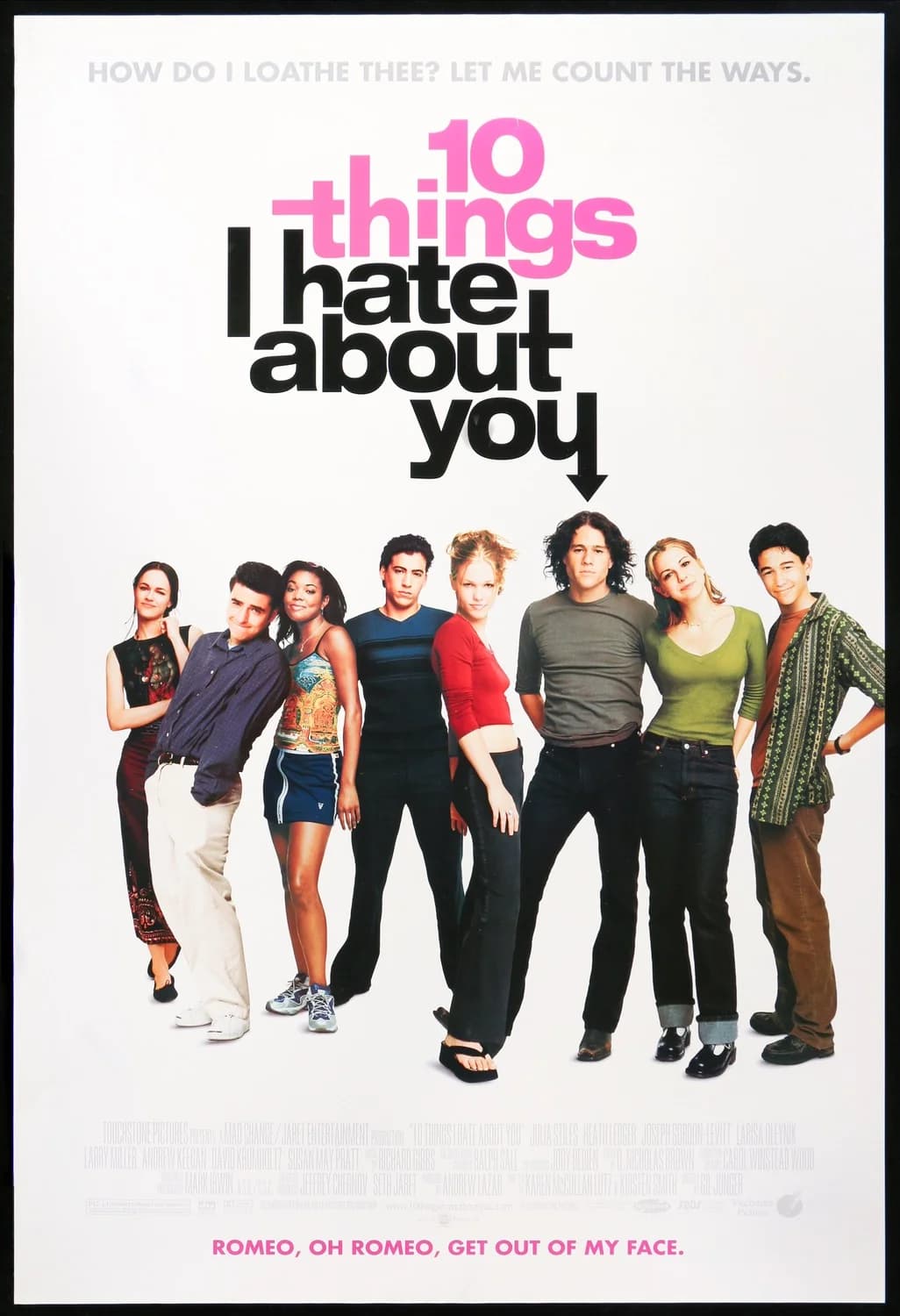
10 Things I Hate About You
Sibling rules, a rooftop serenade and one very stubborn Kat — Shakespeare in a school corridor.
1999 // VHS
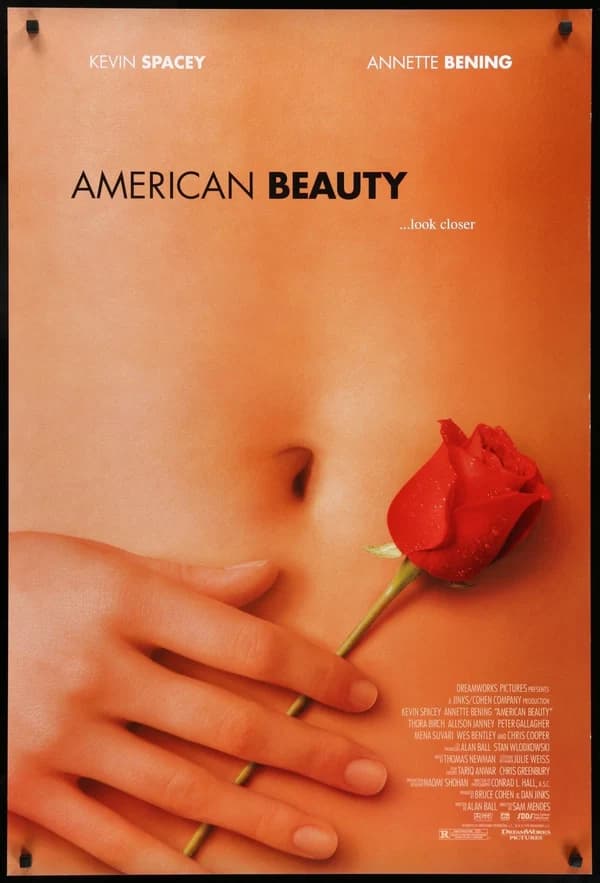
American Beauty
Lester Burnham, suburban rot and a midlife argument that still stings.
1999 // VHS
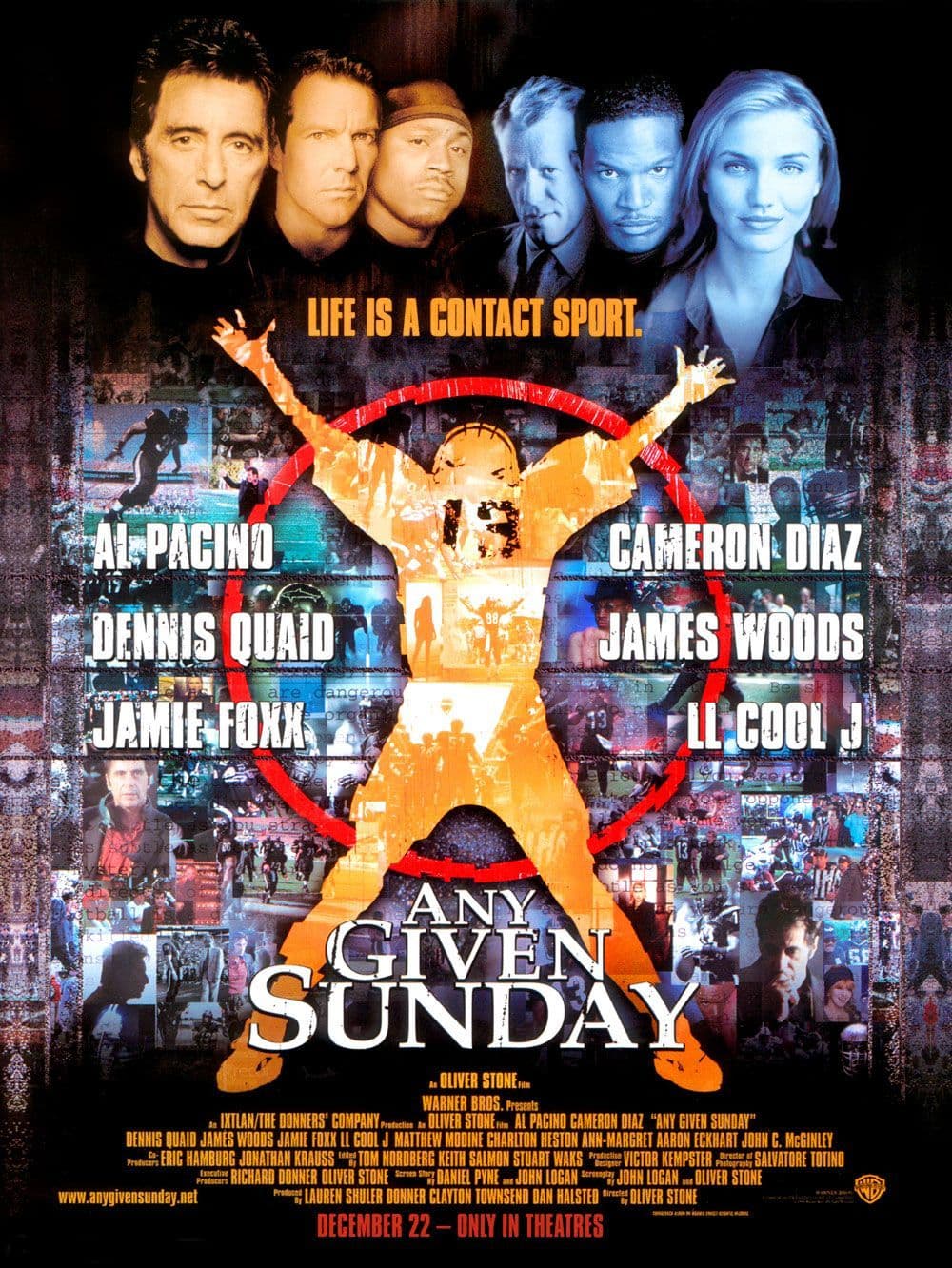
Any Given Sunday
Al Pacino's coach anchors the chaos of a film about football turned into product — loud, messy and oddly persuasive.