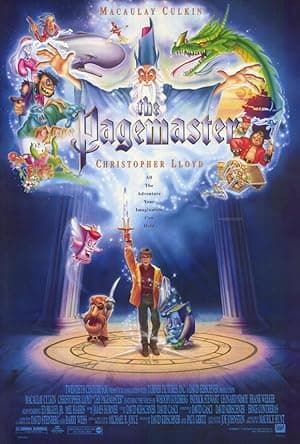
The Pagemaster
A storm, a library and a timid boy who has to learn to open a book — and himself.
// The setup
PLAYBACK STARTED
There’s something oddly comforting about a film that literally herds a nervous child into a library to have his life rearranged by cartoons. The Pagemaster pairs live-action bookends with a sequence of traditionally animated genre set-pieces to ask a straightforward question: can reading and a bit of imagination make you braver? It’s 75 minutes of family-friendly metafiction from Joe Johnston, and it still rewards anyone willing to meet it halfway.
THE MOVIE
Richard Tyler is still the reason this movie works
Right away The Pagemaster stakes its claim not on spectacle but on a personality: Richard Tyler, a cautious kid who treats life like a statistics problem. That nervous, defensive logic — he avoids ordinary things because the numbers say it’s safer — is the whole engine of the film.
A sudden storm funnels him into a big library; a mysterious librarian and a mural do the rest. The live-action framing shoves Richard into an animated world where books stop being flat things on a shelf and start acting like guides and roadblocks.
Joe Johnston directs the live-action sections, and the film’s hybrid nature — short on running time but big on theatrical ambition — keeps the story brisk. It’s a tidy package: family fantasy, a coming-of-age idea about courage, and a literal map of genres waiting to be explored.
THE SETUP
The idea that sets The Pagemaster in motion
Keep the bones simple: Richard Tyler gets caught in a storm, hides in a library and is swept into an animated world. That single premise lets the film move quickly between episodes rather than labour a single extended plot.
Once inside the books, the movie organises itself around personified genres — Adventure, Fantasy and Horror — and treats each like a level in a videogame. Those genre ‘levels’ are filled with familiar, public-domain motifs rather than faithful adaptations of any single classic novel.
The result is episodic by design: Richard faces a short, recognisable challenge in each genre and learns a little more about courage and imagination as he goes. It’s tidy storytelling for a family audience — clear, direct and easy to follow.
That simplicity is the setup’s strength. The movie doesn’t ask you to puzzle out a twist; it asks you to let story logic do the heavy lifting while Richard learns to take risks off the page as well as on it.
THE CHARACTER
Why Richard Tyler matters
Richard isn’t memorable because he’s flashy; he’s memorable because he’s so precisely ordinary in his fear. His default mode is avoidance—he quotes accident statistics as reasons not to climb, not to jump, not to try. That defensive posture makes his journey readable and human.
Putting a kid like that into a world made of stories is a neat trick. The anthropomorphised book-characters — Adventure, Fantasy and Horror — aren’t just window dressing; they’re the tools nudging Richard toward action, each representing a different route out of his timidity.
Macaulay Culkin plays Richard, so audiences at the time came with expectations shaped by his earlier screen presence. The film uses that familiarity, but it’s Richard’s specific arc — a push from numbers to narrative — that gives the film its emotional through-line.
For a family film, Richard works because he’s a recognisable kind of kid: clever in a narrow way and terribly human when faced with the unknown. The Pagemaster’s whole idea depends on him being someone you care enough about to want him to try.
THE PERFORMANCE
Why Whoopi Goldberg's performance matters
One of the film’s calling cards at release was its voice roster, and Whoopi Goldberg voices Fantasy. That casting choice plays into the film’s clear, family-first instincts: big, recognisable names to signal what kind of characters the audience is meeting.
Contemporary reviewers singled out the voice cast as a selling point, noting that the high-profile performers felt well-matched to their animated roles. Goldberg’s contribution sits in that package—part of a broader strategy to make the animated world feel lively and familiar.
Seen as part of an ensemble that includes Patrick Stewart and Leonard Nimoy, the voice performances help signpost each genre: Fantasy sounds different from Adventure or Horror, and the casting makes those distinctions immediate.
In short, Goldberg’s presence is less about celebrity for its own sake and more about giving the Fantasy character a clear, audible personality within the film’s compact runtime.
UNDER THE SURFACE
The Pagemaster has more on its mind than the plot suggests
On the surface it’s a tidy adventure through genre set-pieces. Underneath, the film is quietly arguing that reading and imagination are practical tools: they help a child confront fear rather than merely entertain him.
That move from numbers to narrative is the movie’s moral pivot. Richard learns, in simple terms, that stories offer models for courage — and that trying a little bravado inside a tale can translate into being braver in real life.
The film also enjoys being metafictional: books aren’t inert, they’re worlds you can enter, interact with and learn from. Turning genres into people — Adventure, Fantasy, Horror — makes the idea literal and gives the film a playful theatricality.
Genre personification keeps everything readable for a family crowd. It’s a neat way of explaining how different kinds of stories teach different kinds of lessons, all without getting preachy or heavy-handed.
THE FILMMAKING
How The Pagemaster was put together
The Pagemaster is consciously built as a hybrid: live-action bookend scenes sit around a sequence of traditionally animated episodes. The credits make that division explicit, with Joe Johnston listed for the live-action direction and separate directors credited for the animated material.
That split gives the film a particular identity. The framing scenes ground Richard in the real world, then hand the audience off to animation to explore genre logic without the constraints of realism.
Production credited separate teams for the live-action cinematography and editing of those framing sequences, which reflects a practical, studio-level approach to making a hybrid picture.
In short, the film’s construction is functional: keep the real world recognisable, then let animation do the imaginative heavy lifting.
PURE 80S
The Pagemaster could not belong to any other decade
The Pagemaster sits in a brief, very specific moment of 1990s animation. It comes from Turner Feature Animation, a short-lived division that tried its hand at theatrical animation in the mid-1990s before being absorbed in later corporate reshuffling.
That corporate context matters because the film feels like part of a wider effort to make non-Disney animated features that still carried mainstream, family sensibilities. Casting known live-action and voice actors was part of that impulse.
Macaulay Culkin’s presence also marks the movie as very much of its moment: audiences knew him from earlier hits, and that familiarity shaped expectations about who the film was for and how it would be positioned.
So while The Pagemaster isn’t a manifesto for 1990s cinema, it is locked into the decade’s commercial moment for family animation — an experiment in hybrid storytelling made by a studio with an eye on broad appeal.
WATCHING IT NOW
What has aged — and what hasn't
If you watch The Pagemaster today, the things you’ll remember first are its hybrid structure and the chorus of familiar voices. Retrospectives and home-video commentary often point to those elements as the film’s lasting fingerprints.
Where it can feel dated is tone. Some viewers and critics have found the framing story and its slightly moralising approach less subtle than later children’s films that let character growth breathe without spelling everything out.
That said, the core story — a child transported into recognisable story-worlds and pushed to be braver — remains straightforward and readable. The premise continues to make sense: it’s easy to explain to a modern family in a single sentence.
So parts of it age like a piece of straightforward family theatre: the structure and casting still stand out, while the film’s earnestness reads as very much of its time.
THE LEGACY
Why The Pagemaster still matters
Part of the film’s afterlife comes from one tidy, music-industry footnote: the title song, 'Whatever You Imagine,' received a Grammy nomination for songs written for visual media. It’s an odd little highlight, but a concrete one.
Beyond that, The Pagemaster tends to be remembered as a recognisable mid-1990s family title and as part of Turner Feature Animation’s short theatrical run. It crops up in conversations about non-Disney animated features from the decade for that reason.
So its legacy isn’t grand influence so much as a steady presence in a particular corner of animation history: a pleasant, if not dominant, example of studio-era family filmmaking.
That steady presence is enough to keep it on playlists and home-video shelves when people want a compact, unabashedly earnest family fantasy from the period.
THE VERDICT
Does The Pagemaster still hold up?
Yes — with qualifiers. If you want a tight, family-orientated 75-minute film that literalises the idea of books as places you can visit and learn from, The Pagemaster still does that job. It’s built around a single, clean idea: a risk-averse boy (Richard Tyler) is pushed by Mr. Dewey into animated genre worlds to learn courage.
The movie’s hybrid structure — live-action framing scenes that give way to traditionally animated episodes — keeps the pace brisk and the stakes intelligible. The personified genres (Adventure, Fantasy, Horror) provide clear, almost pedagogical beats that guide Richard toward action.
Where it may not satisfy modern tastes is tone: contemporary critics noted the film’s moralising edge, and that earnestness can feel dated beside later children’s films that favour subtlety. Still, the simplicity is also a strength for younger viewers or anyone after an uncomplicated, story-driven hour and a bit.
If you’re curious, give it a watch. Think of it as a short, affectionate reminder that a good book can be a practical sort of courage training — and that sometimes a storm and a library are all you need to start trying.
Share this movie
// Keep watching
More movies from the 90s
If The Pagemaster is your kind of movie, there's plenty more on the shelves worth rewinding.
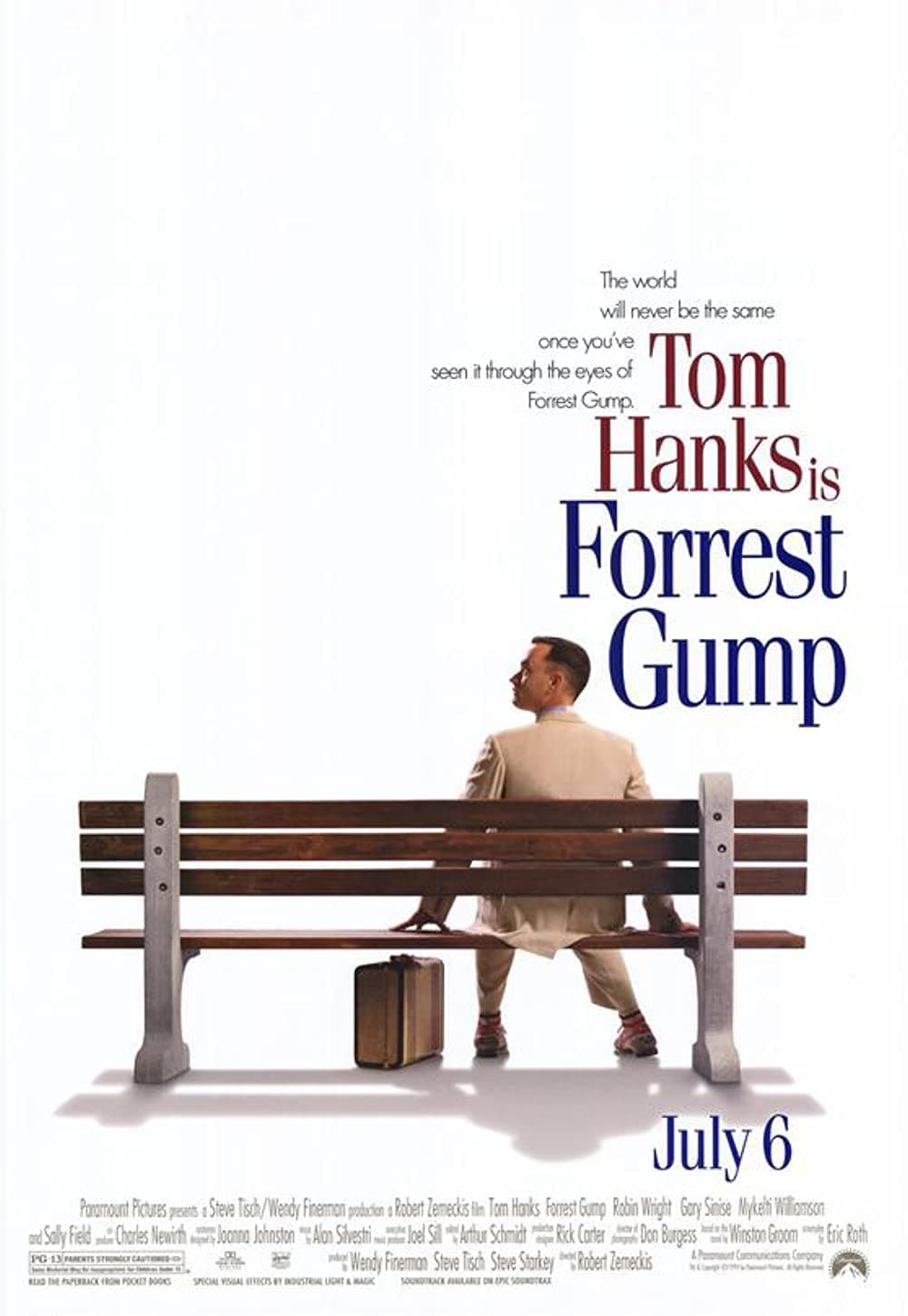
1994 // VHS
Forest Gump
A man on a bench who refuses to make history anything more complicated than a story worth telling.
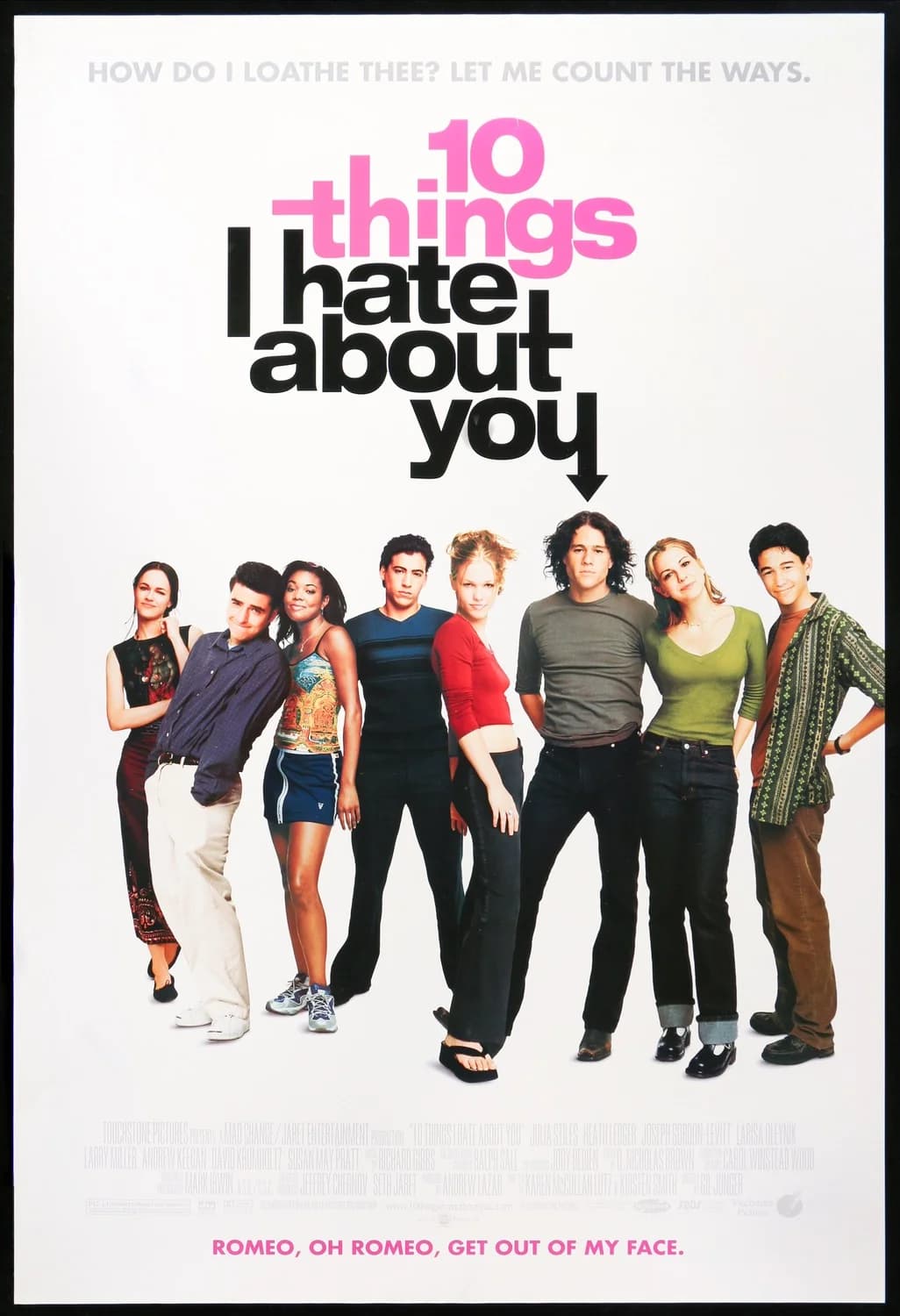
1999 // VHS
10 Things I Hate About You
Sibling rules, a rooftop serenade and one very stubborn Kat — Shakespeare in a school corridor.
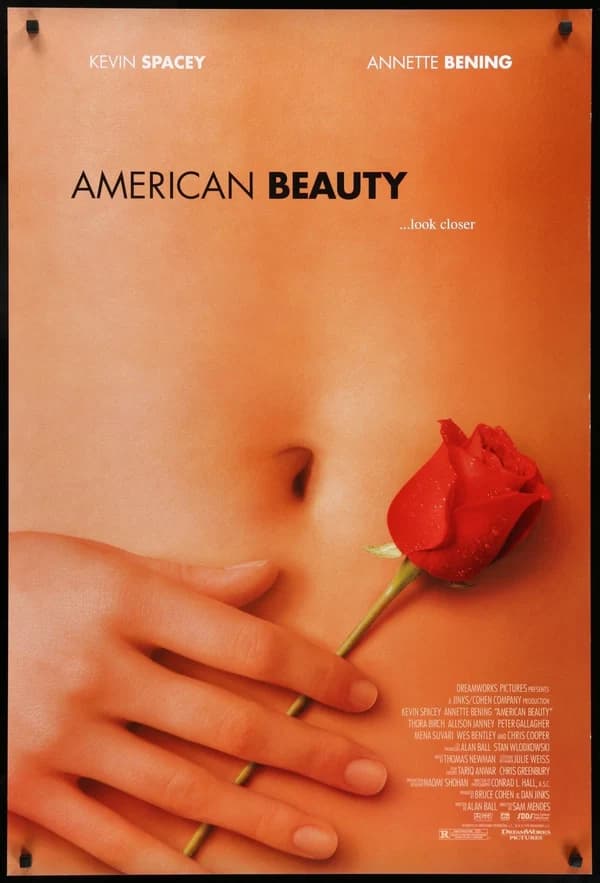
1999 // VHS
American Beauty
Lester Burnham, suburban rot and a midlife argument that still stings.