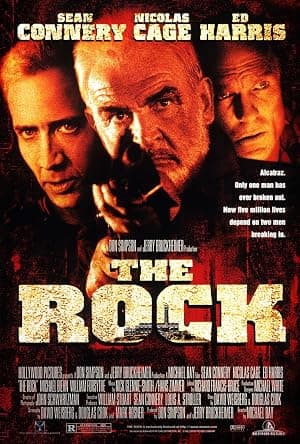
The Rock
Escape artists, moral grudges and a very useful map of Alcatraz.
// The setup
PLAYBACK STARTED
If you remember one thing about The Rock, it’s usually the grizzled ex-prisoner who knows the place inside out. Michael Bay’s 1996 siege thriller straps a time‑sensitive countdown to a single, hostile location — and then hands the map to John Patrick Mason so the rest of the movie can get on with kicking doors in.
THE MOVIE
John Patrick Mason is still the reason this movie works
The Rock gives you a simple percussion beat of a premise: highly decorated Marines take over Alcatraz, load rockets with deadly chemicals and hold San Francisco hostage. That clarity — a single, terrifying threat from one place — lets the film sprint rather than plod.
Then it hands the keys to John Patrick Mason, the only man known to have escaped Alcatraz, and asks him to walk the island with Dr. Stanley Goodspeed, an inexperienced chemical-weapons specialist. That combination — the veteran who knows the terrain and the nervous expert with one particular skill — is what turns a run-of-the-mill siege story into something you care about beyond the explosions.
Under Michael Bay’s direction the movie becomes a star-driven action-thriller: taut time pressure, buddy dynamics and a question about loyalty when Brigadier General Hummel’s grievances about military treatment of covert operatives are thrown into the mix. It’s loud, long (136 minutes) and proudly theatrical — and it knows which two characters to keep on screen when the clock ticks down.
THE SETUP
The idea that sets The Rock in motion
At its most economical, The Rock is a countdown movie: missiles armed with chemical agents sit on an island and the clock runs. That ticking gives every decision — political, tactical and personal — a sting of urgency.
The operational constraints come from more than bad guys on a rock. Parallel chains of command — the FBI, the Pentagon and the White House — shape who can do what and how fast. This bureaucratic pressure is part of the friction; it forces the story to make compromises and asks characters to operate in narrow windows.
The screenplay doesn’t belabour backstory. We’re not handed a full biography of Mason or a blow-by-blow of Hummel’s grievance. Instead the film focuses on the mission, the friction between the team members and the set-piece sequences that test them.
That economy keeps the plot lean enough to sustain momentum while letting character notes — the fugitive who knows the island, the nervous specialist out of his depth, the proud general with a grievance — do the heavier lifting.
THE CHARACTER
Why John Patrick Mason matters
Sean Connery’s John Patrick Mason is the story’s practical advantage. He’s not there for exposition so much as for possibility: his escapee expertise and covert-intelligence background are the literal map out of the island’s problems.
That matters because The Rock is a geography movie as much as an action one. Throwing a man on the inside into the plot converts a static siege into a plausibly navigable mission — and that tracks directly to the film’s confidence that it can stage long, complicated sequences without collapsing under their logistics.
Mason’s knowledge keeps the stakes credible. When the rest of the team is guessing, he knows the shortcuts and the blind spots. That expertise turns scenes of creeping infiltration into suspense; without it, some of the set pieces would feel like noise.
So Mason isn’t just a charming throwback figure. He’s the engine that makes the buddy pairing work: the world‑weary map to Goodspeed’s particular skill set, and the human reason to trust that the team might actually pull this off.
THE PERFORMANCE
Why Sean Connery's performance matters
Contemporary reviewers singled out the principal cast as a reason The Rock rose above its pulpy plot. That’s an important, narrow claim: critics pointed to Connery, Cage and Ed Harris as elements that elevated the material.
That notice matters here because Mason’s role isn’t flashy. He’s a hinge, a repository of knowledge and a personality that the plot keeps returning to when it needs a calm centre — or at least someone who has seen worse.
When a film asks you to accept big action set pieces, having performers who provide small, dependable moments steadies the whole enterprise. The reviewers’ emphasis on the cast underlines how The Rock balances spectacle with people you can follow through the chaos.
UNDER THE SURFACE
The Rock has more on its mind than the plot suggests
At surface level it’s an action-thriller. Underneath, The Rock keeps returning to questions about military honour and betrayal: Hummel’s turn is rooted in perceived injustice to covert-operations casualties, and the movie refuses to present him as a one-note villain.
That moral friction gives the film texture. The hostage situation and the missiles are immediate threats, but the grudge that led to them is a reminder that spectacle often masks messy institutional failures — and the film stages that tension without turning into a lecture.
The buddy dynamic between Mason and Goodspeed provides another layer. The unlikely partnership — the escape veteran paired with the specialised but inexperienced agent — supplies humour, friction and a way to humanise technical danger.
Finally, the time-sensitive siege template keeps everything honest: spectacle is thrilling, but the countdown forces accountability. The story repeatedly asks which choices are for show and which are survival, and that split keeps the drama moving.
PRACTICAL EFFECTS
The effects work that gives The Rock its physical personality
The Rock mixes on-location stunts with visual-effects composites to sell its larger set pieces. That hybrid approach keeps many sequences rooted while still allowing the scale the script demands — fighter-jet approaches and other composites were supplied by Dream Quest Images.
On-set stunt work is clearly credited and visible in the film’s physical personality. The production’s significant stunt programme gives action beats a tangible, kinetic quality that a fully digital approach of the era wouldn’t have matched.
The effect is pragmatic rather than fetishistic: visual composites expand what the action can do, and the on-set stunts make the collisions, falls and chases feel physically present. Together they create the movie’s rough-and-ready muscle.
PURE 80S
The Rock could not belong to any other decade
Released in the summer of 1996, The Rock wears mid‑1990s Hollywood blockbusting on its sleeve: star casting, producer-driven muscle and kinetic rhythms that favour spectacle and momentum.
It sits beside other tentpoles of the era because it trusts big, crowd-pleasing set pieces and quick emotional shorthand over intimacy. Contemporary coverage framed it with similar blockbuster fare, and its commercial success marked it as part of that mainstream action cycle.
That pedigree matters. The film is unapologetically mainstream: it aims to thrill, to deliver a buddy pairing that holds attention, and to stage sequences that read well on a big screen — all very much in the 1990s blockbuster playbook.
Seen that way, The Rock is not a period curiosity. It’s a clear, well-executed statement of how big-studio action was built in the mid‑90s.
THE LEGACY
Why The Rock still matters
The Rock was a genuine commercial success in 1996: big box-office returns made it one of that summer’s major tentpoles and kept its name in circulation long after the credits rolled.
It also received recognition on the technical side — an Academy Award nomination for Best Sound — which underlines how loudly the film was engineered to register in a cinema environment.
Beyond commerce and a sound nomination, the film has been revisited in depth: later reappraisals and a special home‑video edition from a major collection treated it as worth studying, complete with supplemental materials and a visual-effects analysis.
There’s an odd footnote to its afterlife too: reporting around the Chilcot Inquiry noted that some real-world intelligence details resembled elements of the film’s fictional chemical-weapons depiction, producing a rare instance where popular fiction turned up in serious reporting.
THE VERDICT
Does The Rock still hold up?
Yes — but with a small rider. If you want a tightly wound, character-forward blockbuster where the stakes are both practical and personal, The Rock still delivers. The whole concept is straightforward: a group of Marines seize Alcatraz with chemical-armed rockets, and the FBI brings in the only man who escaped the island alongside a nervous specialist to stop it. That premise gives the film an honest, dramatic spine.
What keeps the movie working now is how it balances the mechanics — the single-location infiltration and the ticking-clock missile threat — with human friction. Mason’s insider knowledge makes the infiltration credible; Goodspeed’s particular skill makes the mission necessary. Their mismatch is the emotional lever the film uses to make spectacle matter.
Contemporary critics noticed the same thing: reviewers singled out the principal cast as a key strength, which is relevant because good performances can turn procedural complication into real tension.
So if you’re deciding whether to watch: come for the premise and stay for the pairing. The Rock is 136 minutes of big-studio energy, military grievance woven into a thriller, and a buddy dynamic that keeps the action honest. It’s not subtle, but it still knows where to put its confidence — mostly on John Patrick Mason, the man who makes the plan work.
Share this movie
// Keep watching
More movies from the 90s
If The Rock is your kind of movie, there's plenty more on the shelves worth rewinding.
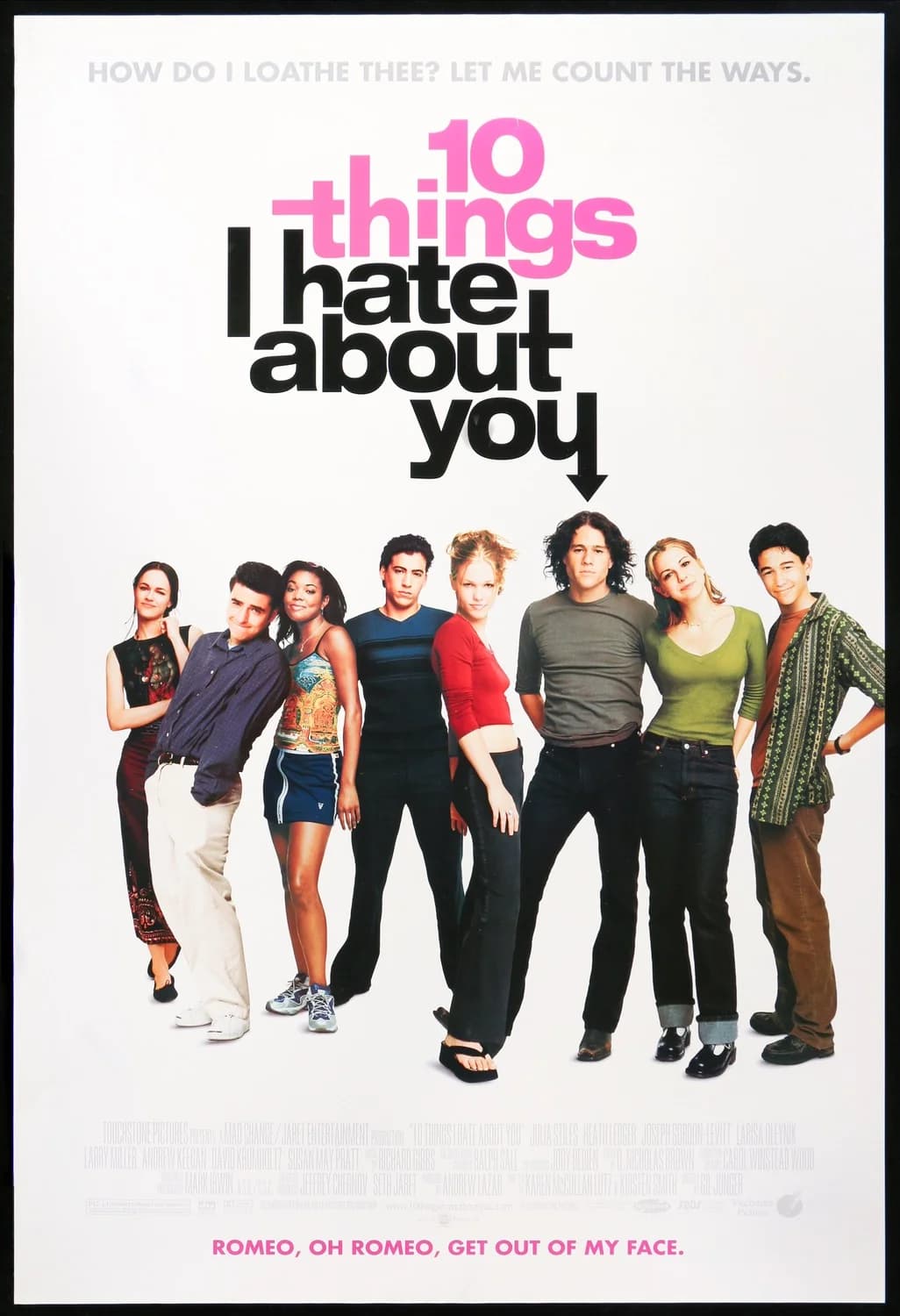
1999 // VHS
10 Things I Hate About You
Sibling rules, a rooftop serenade and one very stubborn Kat — Shakespeare in a school corridor.
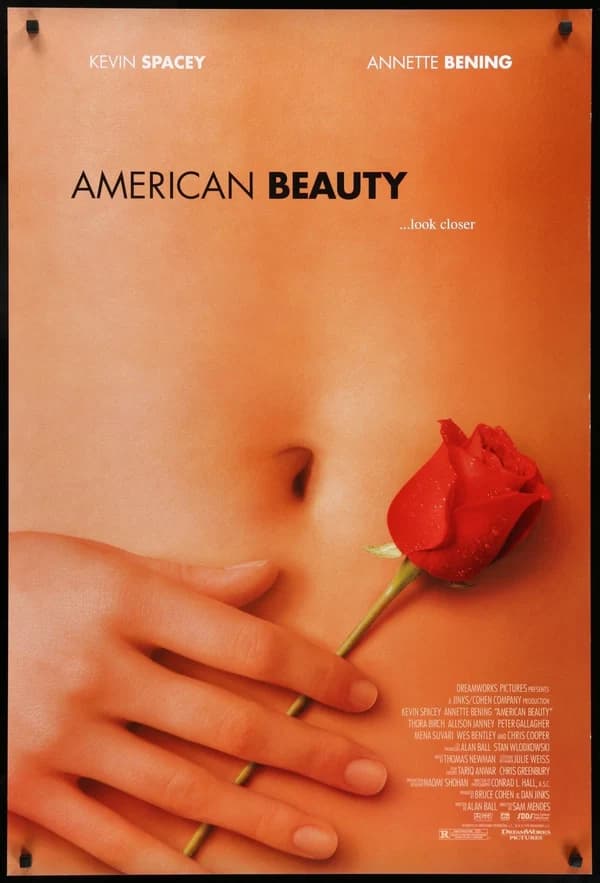
1999 // VHS
American Beauty
Lester Burnham, suburban rot and a midlife argument that still stings.
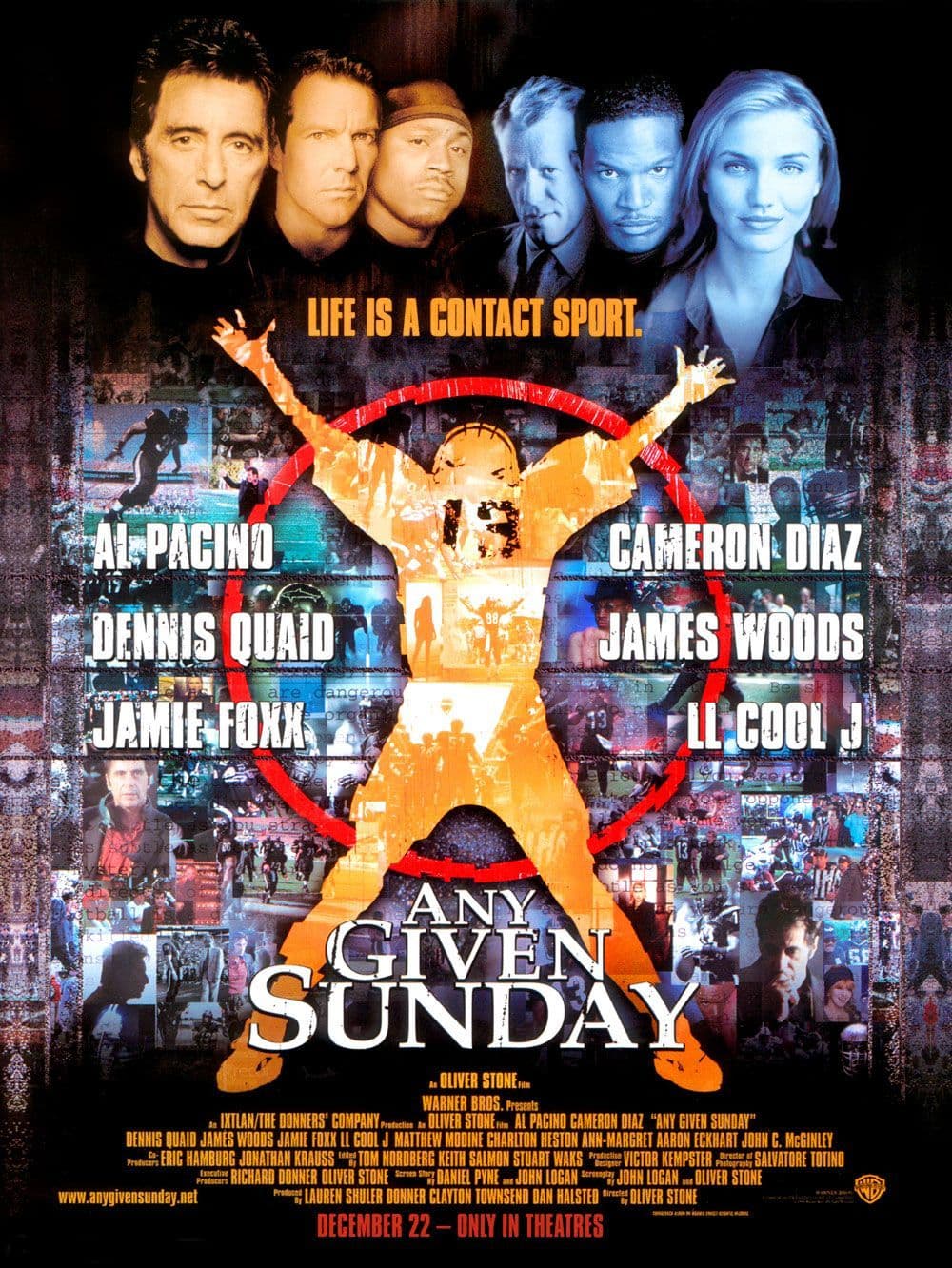
1999 // VHS
Any Given Sunday
Al Pacino's coach anchors the chaos of a film about football turned into product — loud, messy and oddly persuasive.