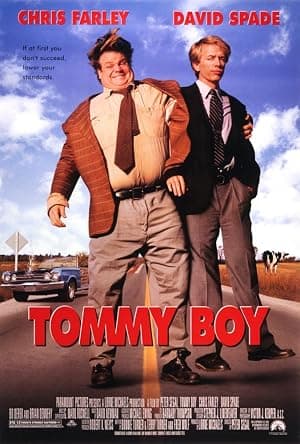
Tommy Boy
A road trip built on loyalty, pratfalls and an enormous, lovable scatterbrain.
// The setup
PLAYBACK STARTED
Tommy Boy is the sort of film you remember by the feel of its jokes and the chemistry of its leads rather than a single perfect scene. It’s a 97-minute buddy comedy about an earnest, accident-prone heir trying to save his father’s auto-parts business — and in doing so, it turns a sales tour into a crash course in responsibility and friendship.
THE MOVIE
Thomas 'Tommy' Callahan III is still the reason this movie works
There’s a simple magnet at the centre of Tommy Boy: a big-hearted, hapless bloke who refuses to walk away from the people his father employed. That premise — the son inherits a near‑bankrupt auto‑parts firm and won’t let the workforce be tossed aside — is the engine that keeps the film honest even when the slapstick gets loud.
Peter Segal steers this mid‑90s buddy road comedy with an intentionally loose hand; the picture runs at a brisk 97 minutes and wastes no time getting Chris Farley’s Tommy and David Spade’s Richard onto the road and into trouble. The structure is pure road‑trip: episodic pitches, pratfalls and a string of increasingly ridiculous set pieces that keep the story moving.
What lifts Tommy Boy above being just a gag reel is its loyalty to the characters’ motivation. Tommy is written as an affable, physically comedic yet inexperienced heir whose sentimental attachment to his dad’s people is what forces him to grow up. That stubborn loyalty makes him oddly compelling — and keeps audiences arguing about the film long after the credits.
THE SETUP
The idea that sets Tommy Boy in motion
Tommy Boy’s premise is straightforward and stubbornly unglamorous: Big Tom dies, Tommy inherits the business and finds it on the brink of collapse. That neat, almost old‑fashioned setup immediately gives the comedy a stake — this isn’t just about jokes, it’s about saving people’s livelihoods.
The chosen way in is a cross‑country sales campaign. The road trip is a plotting device that lets the film breathe: one stop equals one set piece, one handshake or one disaster, and each encounter reveals a little more about Tommy’s temperament and the company he’s trying to protect.
Because the plot is episodic, the film keeps returning to the same pressures — sales numbers, skeptical customers, and the constant threat of corporate takeover — which makes the eventual emotional beats feel earned rather than pasted on.
It’s a tidy engine. The mechanics of selling auto parts across the map give the script clear goals, while the road provides space for Tommy and Richard to argue, bumble and, slowly, start becoming a team.
THE CHARACTER
Why Thomas 'Tommy' Callahan III matters
Tommy isn’t meant to be subtle. The script writes him as an affable, physically comic, inexperienced heir — a man who trips over his own enthusiasm as often as he trips over a rug. But underneath the pratfalls there’s a clear throughline: he’s fiercely loyal to the people who worked for his father.
That loyalty is what makes him memorable. It’s one thing to inherit a company; it’s another to inherit responsibility for other people’s jobs and take it personally. Tommy’s sentimentality becomes his moral compass, and that gives his mistakes weight.
There’s also friction in the family dynamic. The presence of a stepmother who has different financial priorities introduces real pressure — not just to save the business, but to prove that Tommy can do it for reasons other than nostalgia.
Finally, Tommy matters because he forces the film’s tone. He lets the movie be silly without letting it become directionless. His devotion — ridiculous, stubborn and occasionally naïve — is the heart that keeps the jokes from feeling empty.
THE PERFORMANCE
Why Chris Farley's performance matters
Observers at the time and in later retrospectives kept circling back to one point: Tommy Boy lives and dies by its central comic presence. Contemporary coverage and later recollections repeatedly single Chris Farley out as the film’s driving force.
That consensus shows up in more than one place — critics’ notes and interview material gathered in subsequent documentaries both highlight how Farley anchors the movie as its chaotic centre.
Saying the film ‘belongs to’ its lead isn’t a dismissal of the ensemble so much as a recognition of how Farley’s energy shapes nearly every joke and beat. He supplies the kind of commitment that forces the surrounding material to react.
Which is to say: the performance matters because it makes the rest of the film work. When Farley goes big, the script has to keep pace — and, most of the time, it does.
UNDER THE SURFACE
Tommy Boy has more on its mind than the plot suggests
On the surface Tommy Boy is a buddy road comedy full of pratfalls and salesmanship. Underneath, it’s chiefly about friendship and loyalty — not as vague ideals, but as practical forces that push characters into doing the hard thing.
The film is also a coming‑of‑age story, albeit one where the protagonist is forced into adulthood by circumstances rather than earnest introspection. Tommy’s growth is transactional: save the company, save people’s jobs, and you begin to be taken seriously.
There’s a political-ish tug as well: the tension between the small, working‑class firm and the slick consolidation push of corporate competitors frames the stakes. It’s a plainspoken argument in favour of looking after your people rather than your balance sheet.
And beneath the humour sits grief and legacy. Big Tom’s death isn’t ornamental; it’s the emotional debt that sets Tommy’s journey in motion and keeps the comedy from floating free of consequence.
THE FILMMAKING
How Tommy Boy was put together
Tommy Boy’s production credits include Stephen J. Lineweaver as production designer — a credit that matters because a road comedy depends on believable, varied locations to keep its episodic momentum feeling alive.
Naming a production designer is not a decorative detail: in this kind of film, those credited to shape the physical world provide the nuts and bolts for each set piece to land.
Peter Segal’s direction keeps scenes compact and focused on the comic pairing, allowing the production elements to serve the jokes rather than overpower them.
Taken together, the credits read like a straightforward studio comedy assembly: department professionals building a sturdy stage for the leads to play on.
PURE 80S
Tommy Boy could not belong to any other decade
Tommy Boy sits squarely in a mid‑90s trend: films built as vehicles for Saturday Night Live alumni. Pairing two SNL cast members in a buddy comedy is practically the film’s DNA — it’s designed to showcase those distinct comic energies rubbing together.
That placement is more than trivia. The picture was produced by Lorne Michaels and distributed by Paramount, which speaks to the era’s studio strategy: translate TV comedy popularity into theatrical returns by leaning on familiar faces.
The result is a movie that feels like a bridge between sketch comedy instincts and old‑school studio comedy plotting — short, punchy scenes strung together across a road trip so that sketches can breathe within a broader narrative.
Seen that way, Tommy Boy is very much a product of its moment: a mid‑90s SNL alumni vehicle that treats a buddy pairing as the commercial and creative hook.
WATCHING IT NOW
What has aged — and what hasn't
Tommy Boy’s afterlife tells you the most useful thing about whether it ‘holds up’: it grew a genuine cult audience on home‑video and cable. That steady second life has allowed people and critics to reassess Farley’s comic appeal outside the initial reviews.
That reassessment is visible in how the film has been treated on home media — restorations and editions with commentary have appeared, which is a practical sign of continued interest rather than sentimental nostalgia.
The basic themes — friendship, loyalty and a reluctant step into responsibility — are durable. Those emotional anchors mean the film still works for viewers who come for heart as much as for laughs.
What ages less gracefully is the film’s reliance on broad slapstick and extremely loud set pieces; they’re true to the film’s style, but they won’t land for everyone now. If you respond to sincerity and a comic partnership, Tommy Boy still clicks; if you prefer subtlety, it will feel dated.
THE LEGACY
Why Tommy Boy still matters
Tommy Boy’s lasting footprint is pragmatic rather than mythic. It earned its leads the MTV Movie Award for Best On‑Screen Duo, which underlines how central the Farley‑Spade pairing was to the film’s identity.
The pairing’s success also led to another feature collaboration and helped cement both performers as identifiable 1990s comedy leads — a niche but real legacy within that era’s comic landscape.
On a different note, the film’s reception was mixed enough at release that even small honours and small humiliations sit side by side: Bo Derek received a Razzie nomination for her supporting role, which is part of the film’s odd afterlife.
Most importantly, Tommy Boy’s long tail — the cult status it achieved in home‑video and cable, plus later anniversary releases — is what keeps it in circulation. It survives because people kept watching it and talking about it, not because it swamped critics or rewrote the genre.
THE VERDICT
Does Tommy Boy still hold up?
Yes — with a caveat. If you watch for the central relationship and the film’s earnest theme of loyalty, Tommy Boy still hits. The conceit is straightforward: Tommy inherits a failing auto‑parts business and, with Richard at his side, sets off to drum up orders on a cross‑country sales trip. That road‑trip structure keeps the film moving and gives those themes room to breathe.
The antagonist’s role as a calculating corporate figure and the stepmother’s financial priorities give the comedy an actual fight to win; it’s not just pratfalls for their own sake. The plot’s stakes — jobs, legacy and responsibility — are clear, and that clarity helps the film’s heart come through the noise.
Chris Farley’s Tommy is the movie’s lifeblood, written as an affable, physical, inexperienced heir whose sentimental loyalty drives him into doing the right thing. David Spade’s Richard provides the sharp, detail‑oriented counterbalance, and that straight‑man/foil dynamic is what lets the bigger gags land.
So: watch it if you want a noisy, generous comedy with a genuine emotional throughline. Don’t watch it expecting subtlety. Tommy Boy’s particular charm is that it keeps tripping over itself until, somehow, it lands on the decent thing — and that, in the end, is why it still feels worth revisiting.
Share this movie
// Keep watching
More movies from the 90s
If Tommy Boy is your kind of movie, there's plenty more on the shelves worth rewinding.
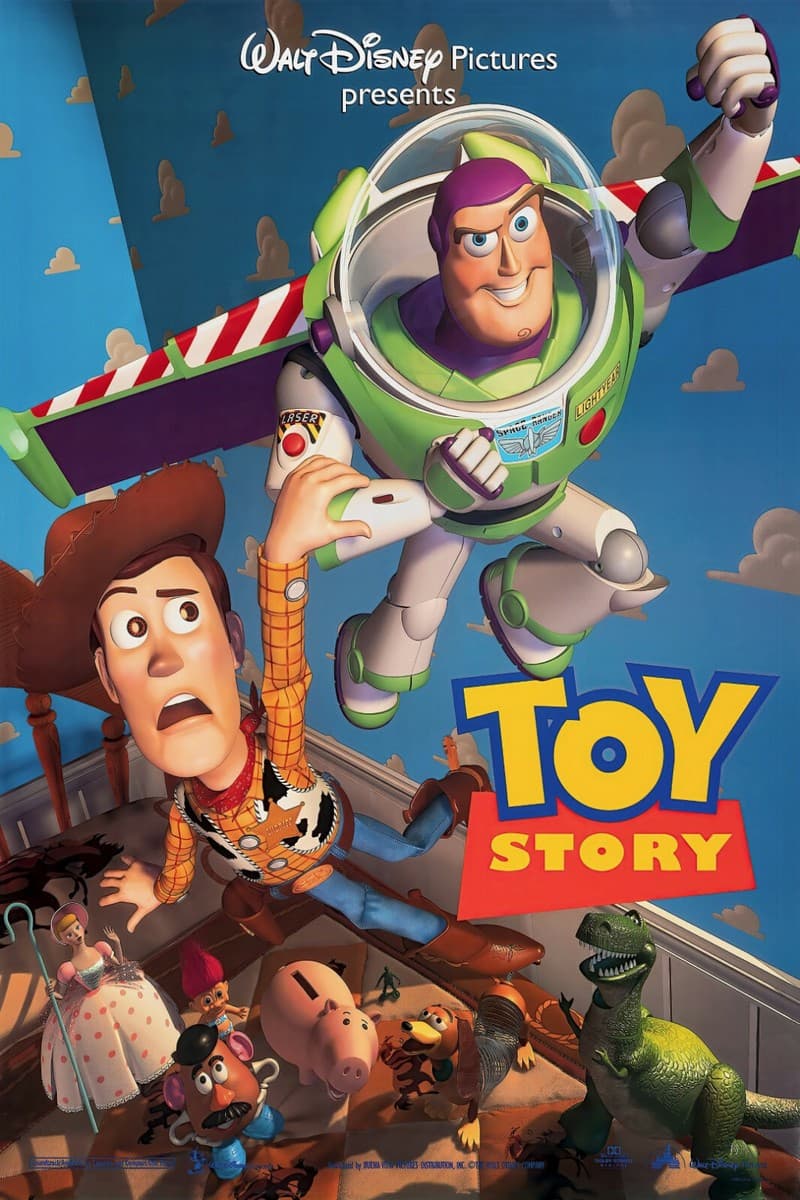
1995 // VHS
Toy Story
A pull‑string cowboy, a deluded space ranger and a small, very particular war over being loved.
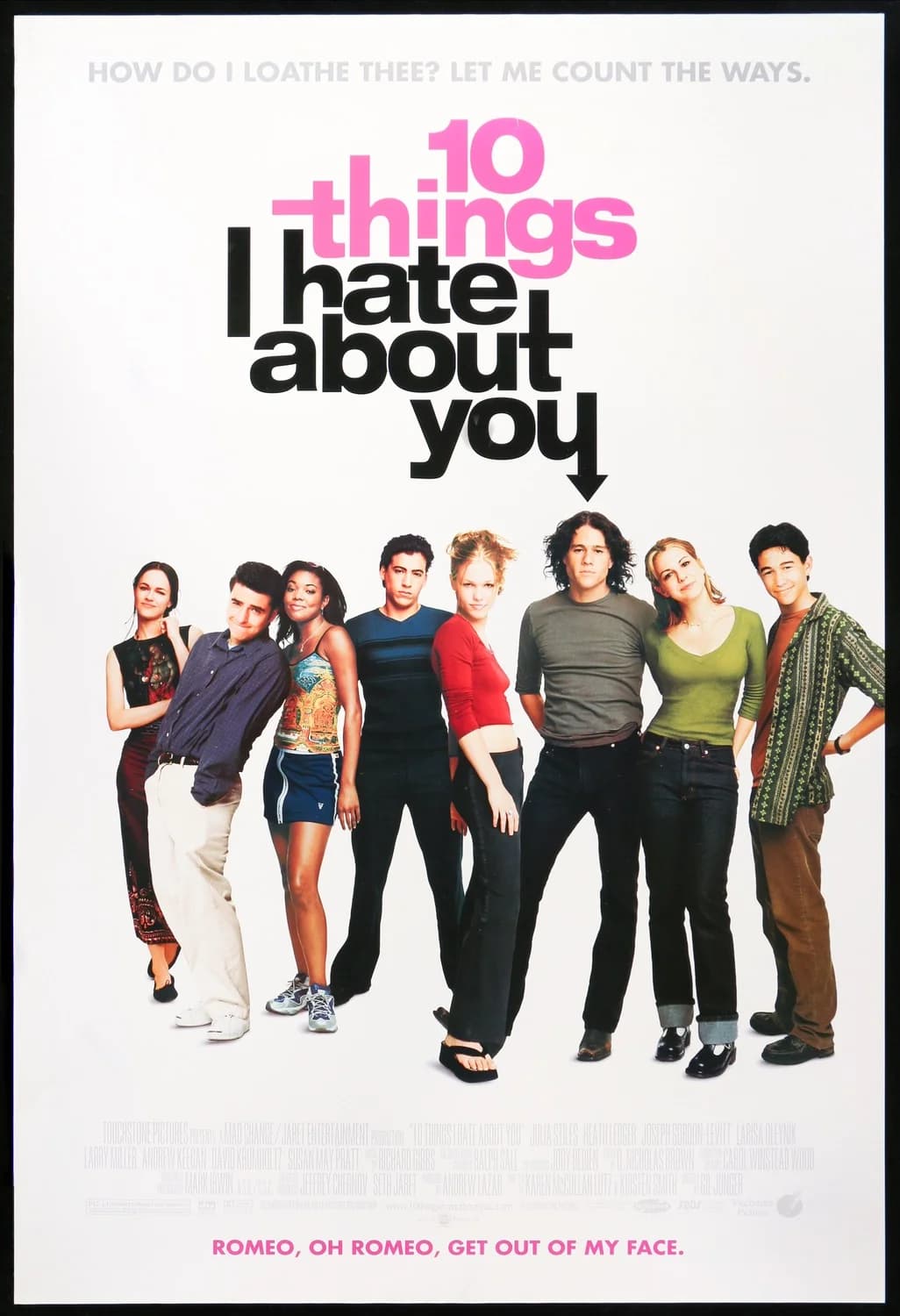
1999 // VHS
10 Things I Hate About You
Sibling rules, a rooftop serenade and one very stubborn Kat — Shakespeare in a school corridor.
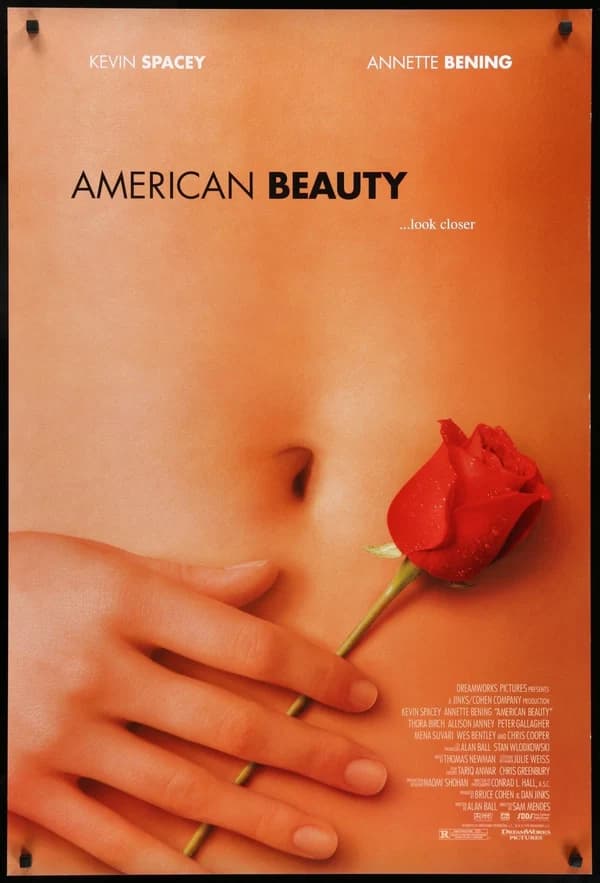
1999 // VHS
American Beauty
Lester Burnham, suburban rot and a midlife argument that still stings.