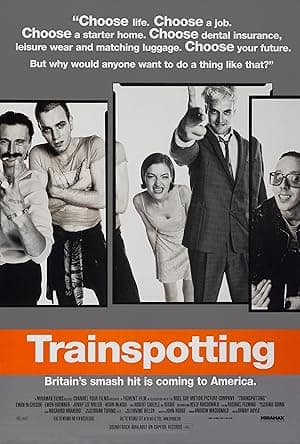
Trainspotting
A loud, filthy, funny plunge into addiction and friendship — Renton keeps the moral argument honest.
// The setup
PLAYBACK STARTED
Trainspotting still lands because it centres on a single, argumentative heart: Mark 'Renton' Renton. Danny Boyle and John Hodge took Irvine Welsh's rough prose and turned it into a short, sharp film about heroin, loyalty and the daily business of surviving in a place that offers very little. If you haven't seen it since the 90s, you're not going back to nostalgia so much as to an urgent, relentless piece of filmmaking.
THE MOVIE
Mark 'Renton' Renton is still the reason this movie works
People keep coming back to Trainspotting because it gives us a central voice we can argue with. The film follows Mark Renton and his mates — heroin users in a hard-up corner of Edinburgh — as they wobble between drug use, attempts at rehab, petty crime and the gaudy idea of 'choosing life'.
Danny Boyle makes Renton the focal point. That opening voice-over — the famous catalogue of modern comforts and consumer slogans — frames Renton’s stubborn contempt for ordinary options and sets the film’s moral tug-of-war in motion.
Put simply: the film works because Renton is interesting enough to carry an argument about addiction, responsibility and escape. Ewan McGregor plays him, and the picture never loses sight of how messy those choices are.
THE SETUP
The idea that sets Trainspotting in motion
Trainspotting isn't trying to be a sprawling chronicle. It’s a compact, often elliptical portrait of a group of friends whose lives are organised around heroin. That simple premise — a circle of addicts moving between use, attempts at getting clean and minor crimes — gives the film a tight focus.
Key events are deliberately sharp: a shoplifting arrest that lands Spud in trouble and forces Renton into a rehab programme, a tragedy that haunts the group, and a friend’s decline into fatal illness. These moments test loyalties and keep the story from drifting into neat moral lessons.
Boyle and John Hodge keep the geography close, too: although the story is set in Edinburgh, much of the production was shot in Glasgow, which helps the film feel immediate rather than cinematic in the glossy sense.
THE CHARACTER
Why Mark 'Renton' Renton matters
Renton matters because he keeps the film honest. He’s not a martyr, and he’s not a villain. He’s intelligent, self-destructive and forever arguing with himself about whether to join ordinary life or keep running from it.
That oscillation — contempt for conventional consumer culture on the one hand, and real, painful attempts to escape addiction on the other — is what gives the film its tension. Everything else in the picture orbits Renton’s choices and failures.
And because friendship and loyalty are woven into the story, Renton’s decisions ripple out: his bargains and betrayals are the engine that keeps the group’s story moving.
THE PERFORMANCE
Why Ewan McGregor's performance matters
McGregor’s Turn as Renton is the breakout element the story needed. Contemporary and later commentary singled out his portrayal as a breakout role, and it brought him significant British acting recognition.
That matters because the film depends on Renton being credible as someone who can both sneer at life’s options and suffer the real consequences of his choices. The casting gave the film a focal point that critics and audiences noticed at the time.
UNDER THE SURFACE
Trainspotting has more on its mind than the plot suggests
On the surface it’s a film about heroin; underneath it’s a film about what heroin does to day-to-day life. The picture stages the lived experience of addiction — withdrawal, relapse and the small decisions that make survival possible — rather than reducing everything to a cautionary slogan.
It also places that experience inside urban poverty and social marginalisation. The characters are not battling addiction in isolation; they’re navigating limited options in places that don’t offer easy exits.
The repeated conflict between choice and compulsion is central: Renton’s famous catalogue of ‘choose life’ options frames the movie’s moral argument. Friendship and loyalty complicate that argument, because survival often depends on messy group ties rather than clear ethical choices.
Finally, the film carries a quieter critique of consumer culture and questions around masculinity and identity — how a generation measures itself when conventional routes to status and comfort seem closed off.
THE FILMMAKING
How Trainspotting was put together
Boyle’s direction gives the film a particular urgency. He mixes handheld-leaning framing with sudden, stylised set pieces to dramatise the interior states of addiction — the film swings between gritty realism and heightened sequences.
Those hallucinatory moments weren’t built out of digital wizardry. The filmmakers relied on practical in-camera methods and conventional trick-camera techniques, which keeps the film tactile and oddly immediate when it slips into the surreal.
PRACTICAL EFFECTS
The effects work that gives Trainspotting its physical personality
Some of the film’s most notorious moments are literally hands-on. For the 'worst toilet in Scotland' sequence the crew built a platform with a trapdoor so an actor could be lowered safely — it was a physical, staged bit of filmmaking rather than a post-production trick.
Even the unpleasant props were manufactured with care. The toilet contents were a prop mixture made from non-biological materials rather than real sewage, which kept the set functional while delivering the necessary gross-out impact.
PURE 80S
Trainspotting could not belong to any other decade
Trainspotting arrived in 1996 at a moment when British film and music were talking to each other. Its soundtrack — a mix of 1970s rock, Britpop and electronic music — tied the film into the mid-90s music scene and helped it speak beyond cinema circles.
The picture also benefited from the British independent-film infrastructure of the era. Production and distribution partnerships in the 1990s allowed UK films to find international audiences, and Trainspotting is a clear example of that system working.
Because of those connections — the music, the way it travelled and the era’s industry structures — the film feels very much like a child of the mid-1990s, belonging to that cultural moment rather than floating free of it.
THE LEGACY
Why Trainspotting still matters
There are concrete, traceable reasons Trainspotting doesn’t just live in memory. John Hodge won the BAFTA for Best Adapted Screenplay for this film, and the picture has been a regular presence in UK best-of lists.
The film also returned to public attention through restorations and curated home-video releases, including supervised restorations and archival editions from major distributors, which help keep it in circulation for new viewers.
Finally, the existence of a direct sequel in 2017 — reuniting the original cast and director — is further evidence that the film’s story and characters retained enough resonance to be revisited on their own terms.
THE VERDICT
Does Trainspotting still hold up?
Yes — but with a clear rider. Trainspotting remains a lean, often unforgiving film about heroin, friendship and the hard choices people make when options are scarce. It tracks repeated attempts at abstinence and relapse, and it stages withdrawal and overdose with a mix of realist scenes and heightened, hallucinatory sequences that still read as purposeful.
At the centre of that is Renton: a character who refuses tidy moral categorisation and whose decisions drive the group’s fortunes. Ewan McGregor’s casting as Renton was widely noted at the time as a breakout moment, and the film still depends on having a central figure who can hold that argument for ninety-odd minutes.
If you’re watching now, the film’s compressed 93-minute form, its refusal to sentimentalise its subjects and its collision of social reality with stylised cinema help it remain powerful. It’s not comfortable; it’s not meant to be. It asks you to watch people trying to survive, sometimes succeeding and sometimes failing.
So yes — watch it. But come prepared: Trainspotting isn’t nostalgia dressed up as entertainment. It’s a messy, moral picture that still pushes the uncomfortable questions it opened with.
Share this movie
// Keep watching
More movies from the 90s
If Trainspotting is your kind of movie, there's plenty more on the shelves worth rewinding.
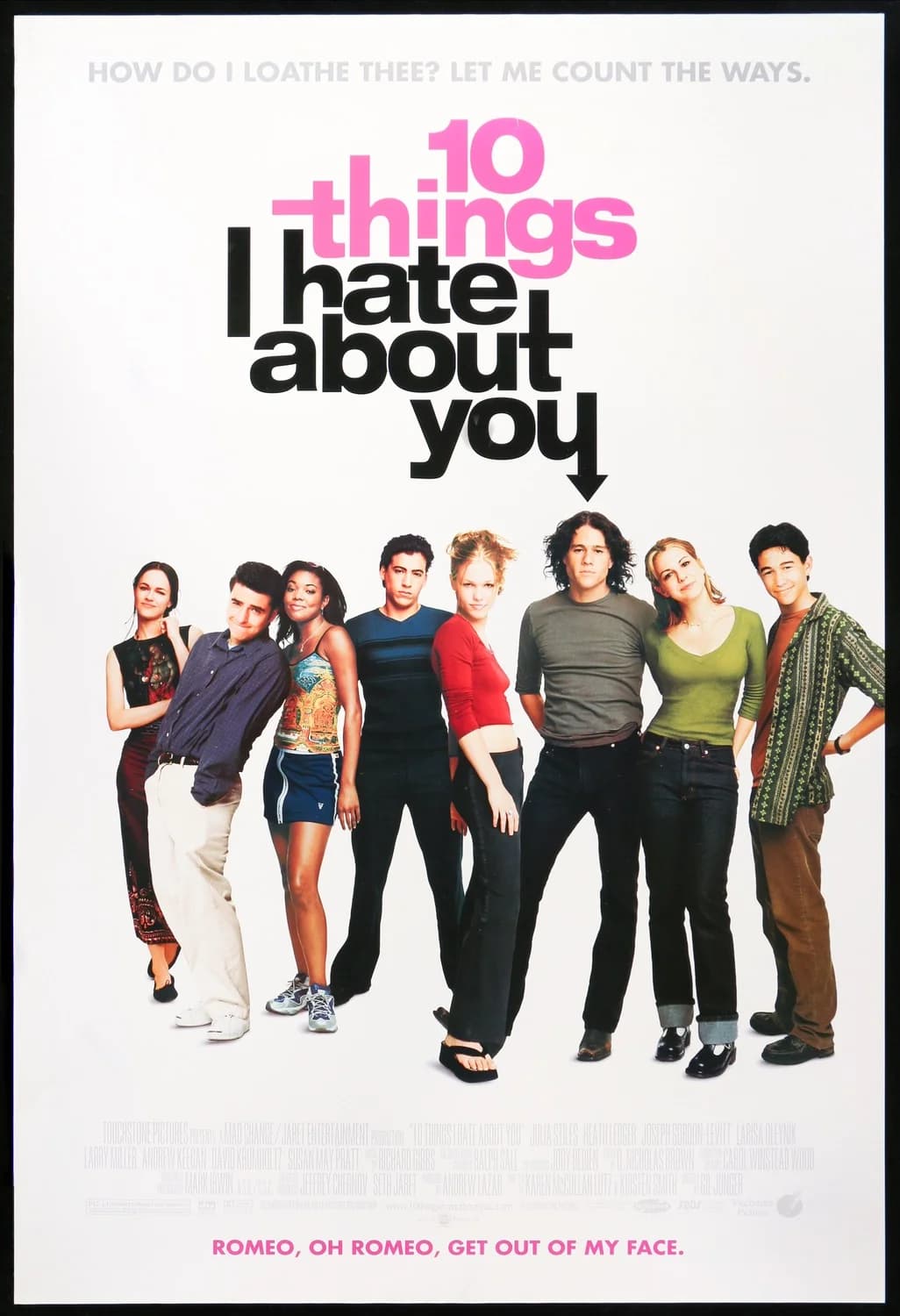
1999 // VHS
10 Things I Hate About You
Sibling rules, a rooftop serenade and one very stubborn Kat — Shakespeare in a school corridor.
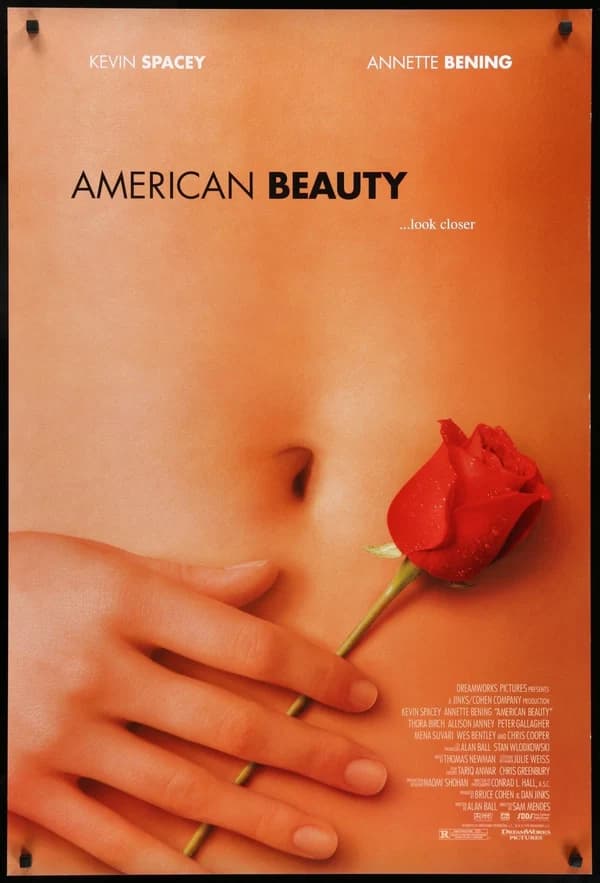
1999 // VHS
American Beauty
Lester Burnham, suburban rot and a midlife argument that still stings.
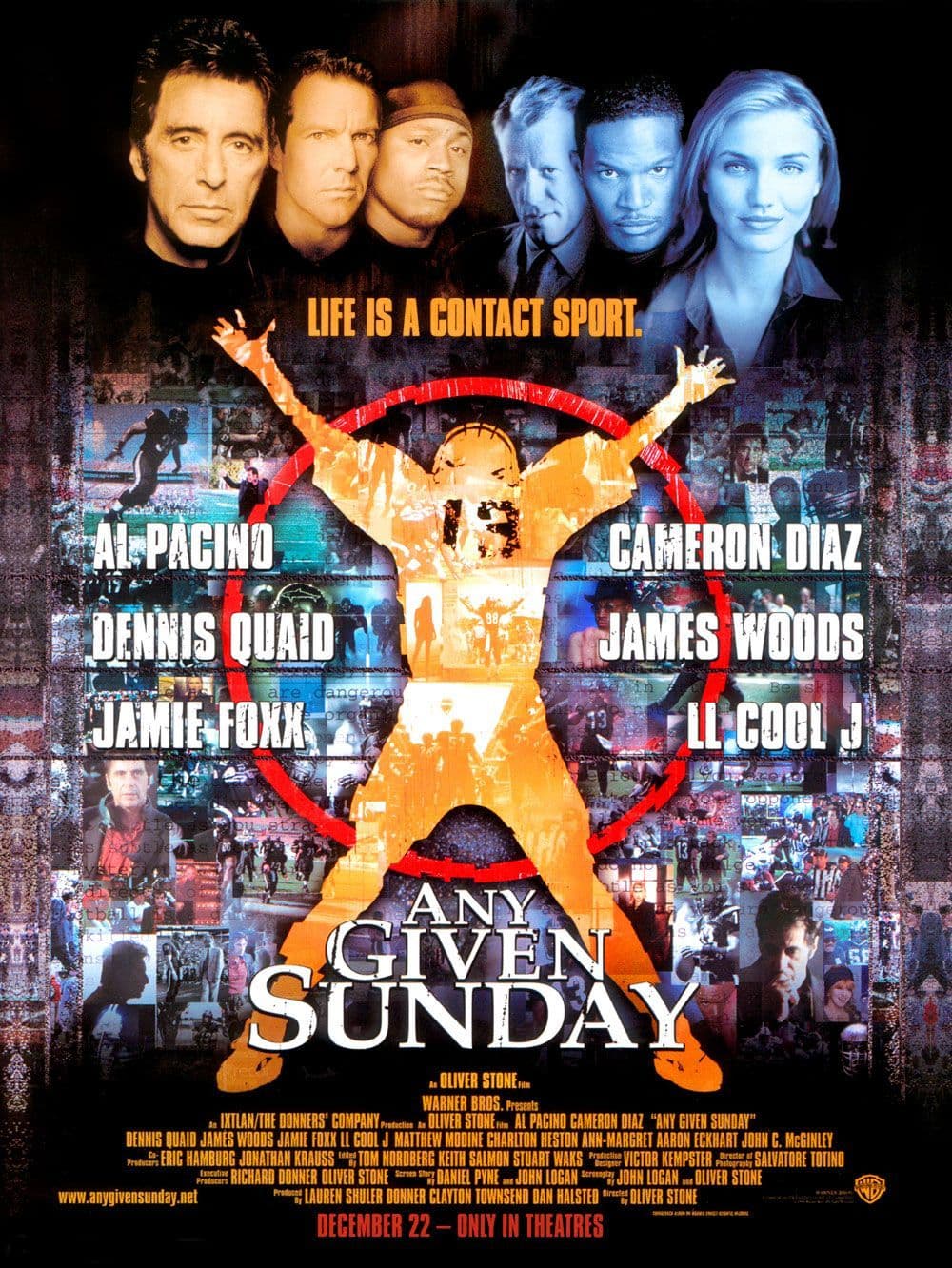
1999 // VHS
Any Given Sunday
Al Pacino's coach anchors the chaos of a film about football turned into product — loud, messy and oddly persuasive.